
Bedroom Storage Ideas for Under-Bed and Vertical Space
Use low-profile bins, wall storage, and furniture edits to create a calmer small bedroom.
Quick takeaways
- Store low-use items under the bed, not daily essentials.
- Use wall space for books, lighting, or baskets.
- Reduce visual clutter around the bed first.
Bedrooms are easier to keep calm when storage is quiet and predictable. The two strongest tools are under-bed storage and vertical storage that does not eat into walking space.
These ideas work especially well in small apartments because they use areas that are already there instead of forcing in one more bulky piece of furniture. When people say a bedroom feels cramped, the issue is often less about square footage and more about poor storage placement. The floor gets crowded, the bed area looks busy, and the eye never gets to rest.
A better system starts by protecting the quietest parts of the room first: the path around the bed, the top of the nightstand, and the floor near the closet.
Use under-bed storage with categories
The space under the bed works best for items you do not need every day, such as:
- Out-of-season clothes
- Extra bedding
- Memorabilia
- Travel gear
Choose low bins with labels so you do not need to open several to find one thing.
If you use under-bed storage for daily essentials, it often becomes annoying fast. That is why it works best for low-rotation categories, not your everyday socks or pajamas.
A useful under-bed split looks like this:
- one bin for off-season clothes
- one bin for extra bedding
- one bin for travel or memory items
- one bin left flexible for overflow during busy seasons
If your bed frame is low, fabric zip bags may fit better than hard plastic bins. If your room collects dust quickly, choose containers that close fully.
Clear the bed zone visually
The area around the bed has a huge effect on how restful the room feels. Limit what sits on the nightstand and floor nearby.
Try:
- One tray for bedside items
- A wall sconce instead of a table lamp
- A basket for throw pillows or extra blankets
You can also cut visual clutter by editing what stays within arm’s reach. Keep only the items you actually use at night, such as:
- a book or e-reader
- a water glass
- lip balm or hand cream
- phone charger
Everything else should live in a drawer, a nearby basket, or a closet shelf. When the bed area looks simpler, the whole bedroom feels calmer.
Lift storage up the wall
If floor space is tight, add storage vertically with:
- Floating shelves
- A narrow bookcase
- Hooks behind the door
- A wall pocket organizer
These options help without making the room feel boxed in.
Vertical storage works best when it stays visually light. In a bedroom, that usually means using:
- narrow shelves instead of deep ones
- a tall slim bookcase instead of a wide dresser
- hooks for a few repeat-use items instead of too many decorative pegs
If you add too much wall storage, the room can start feeling crowded again. Try to store only categories that are worth seeing or easy to contain neatly, such as books, baskets, jewelry, or a small catchall tray.
Smart furniture swaps for small bedrooms
Sometimes the best storage improvement is not another organizer. It is choosing a furniture piece that does more than one job.
Examples include:
- a nightstand with a drawer instead of an open stool
- a bed frame with extra clearance for bins
- a dresser topper with divided trays
- a storage bench at the foot of the bed if there is room
In small bedrooms, multi-use furniture matters because every extra item has a visual cost. One useful piece is usually better than two smaller pieces doing half the job.
Easy bedroom reset routine
Once the storage is in place, keep the room easier to maintain with a quick reset:
- return clothes to one of three places: closet, hamper, or donation bag
- clear the floor around the bed
- restack the nightstand tray
- put any overflow back into its under-bed bin or vertical basket
This takes only a few minutes, but it stops the room from slowly turning into a holding zone for unfinished tasks.
Common mistakes to avoid
Even good storage products can fail in a small bedroom if the setup is too complicated. Watch for these problems:
- storing too many categories under the bed
- using deep wall shelves that stick into the room
- letting the nightstand become a catchall surface
- buying matching bins before measuring the bed clearance
The best bedroom storage systems feel almost invisible. If a storage idea adds visual noise or makes daily life harder, it is not really helping.
Final thought
The best small-bedroom storage is almost invisible in daily life. It supports rest by hiding overflow, keeping pathways clear, and making the room easier to reset at night. Under-bed storage and vertical storage are effective because they solve real space pressure without asking the room to do more than it already can.
Keep reading
Related guides worth reading next
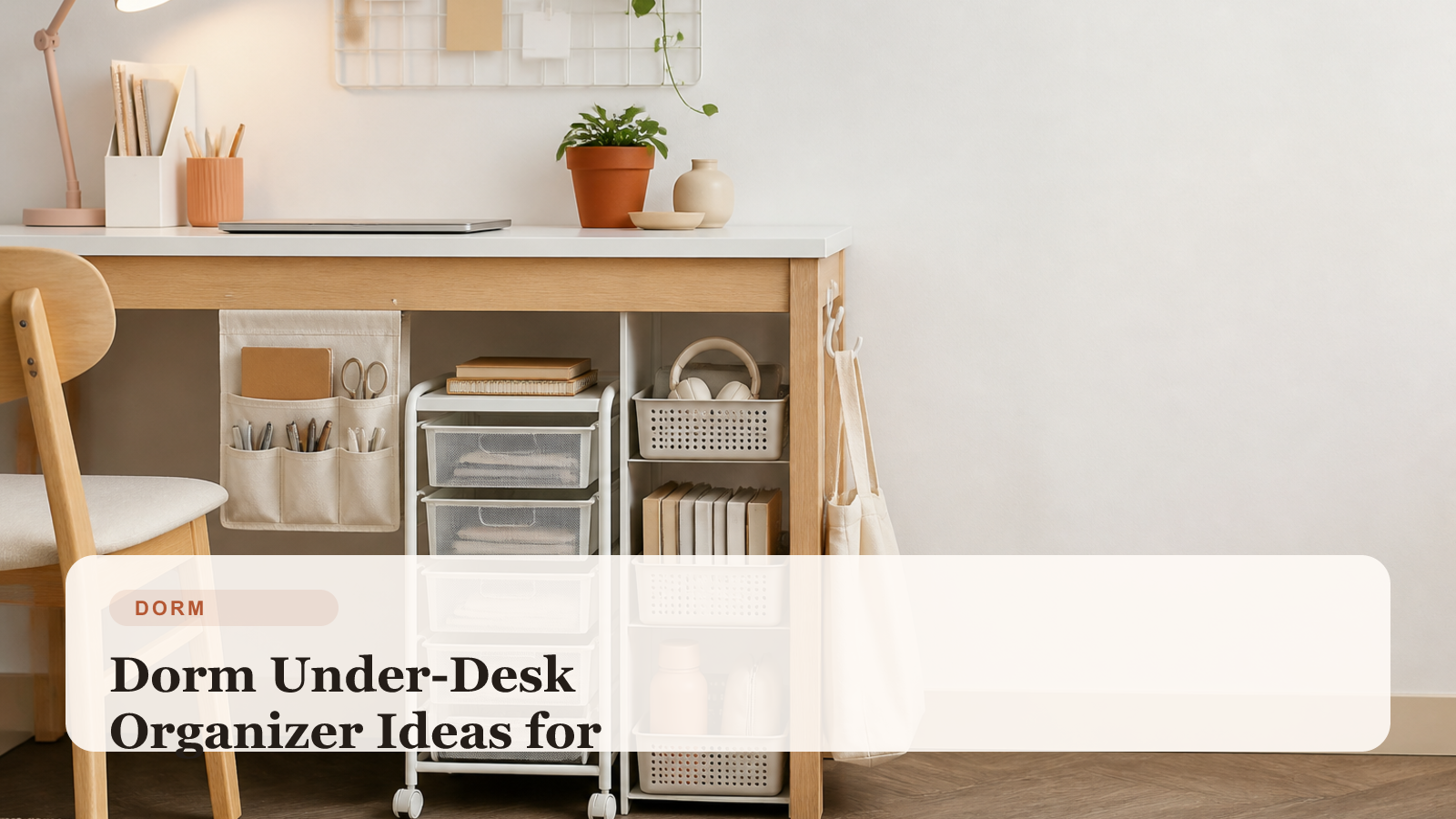
Dorm Under-Desk Organizer Ideas for Small Rooms
This guide focuses on one smart dorm zone: how to use under-desk organizers so study supplies stop spreading across the room.
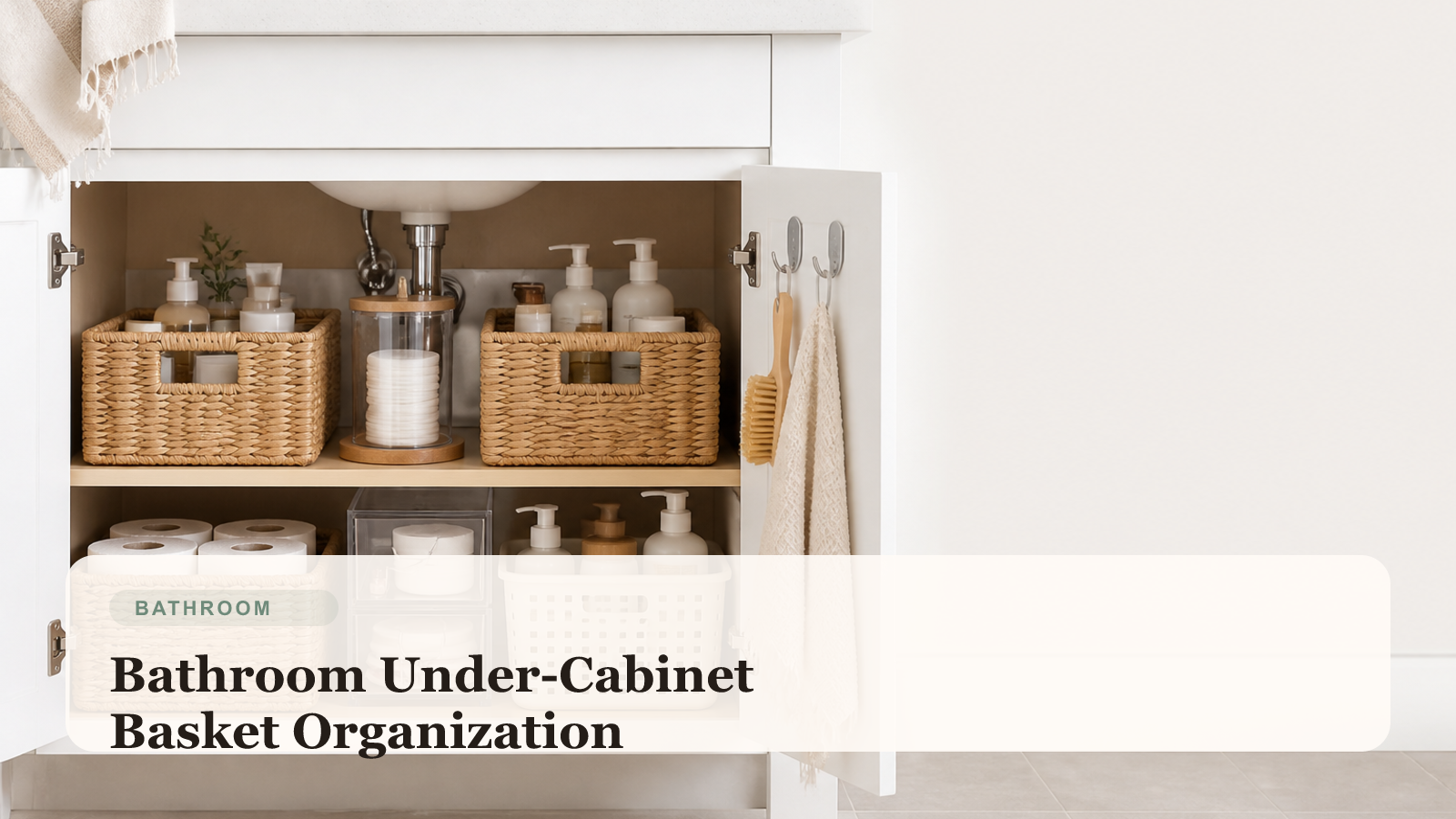
Bathroom Under-Cabinet Basket Organization Ideas for Renters
This guide focuses on one messy bathroom zone: how renters can use baskets under a cabinet so products stay reachable without becoming hidden clutter.
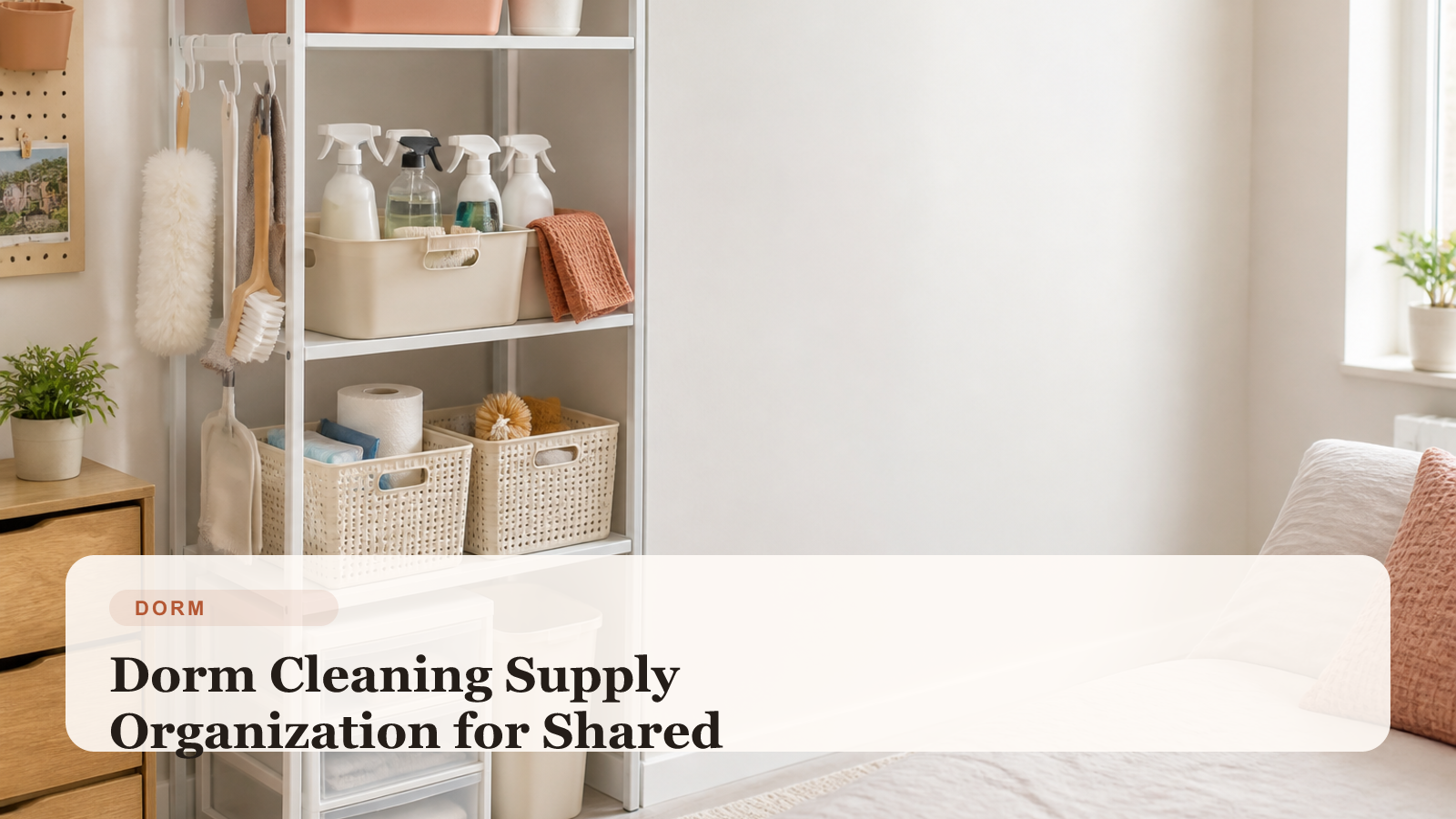
Dorm Cleaning Supply Organization for Shared Rooms
This guide focuses on one practical dorm problem: how to store cleaning supplies in a shared room without letting them become random clutter.
Editorial note
TidyHaven guides are written for practical, renter-aware small-space living. Pages may be updated over time for clarity, freshness, and better real-world usefulness.