
Living Room Toy and Blanket Storage for Small Spaces
Keep a shared living room looking calm with baskets, concealed storage, and easy evening resets.
Quick takeaways
- Open baskets are best for soft items like blankets.
- Hidden storage helps shared spaces feel calmer.
- Keep toy categories broad and easy to maintain.
The living room often becomes the catch-all space for the whole household. A good storage setup keeps it functional without making it feel like a playroom or storage closet.
That balance matters in small homes because the living room usually has to do several jobs at once. It is the place where people relax, host guests, watch television, fold laundry, play with kids, and store throw blankets for changing temperatures. When every category lands in the same room, the easiest-looking storage option is not always the one that keeps the room calm.
The best living room systems do two things well:
- they make pickup fast enough to happen every day
- they protect the room from looking like open storage all the time
Pick one blanket home
Blankets look cozy until they pile up. Give them one obvious home:
- Large floor basket
- Ottoman with storage
- Lidded bench
If the basket fills, it is a signal to reduce the number in rotation.
Choose the home based on how the room is used:
- Use an open basket if people grab blankets often and you want quick access.
- Use an ottoman if you need extra seating and hidden storage in the same footprint.
- Use a bench if the room also needs toy storage or a place to stage guest items.
To keep the basket from becoming visual clutter, fold or roll the blankets the same way. The room feels more intentional when one container looks full but tidy instead of overflowing with mismatched shapes.
Simplify toy storage
Detailed toy sorting rarely lasts in a shared room. Use broad categories instead:
- Building toys
- Small figures
- Art supplies
- Books
One bin per category is usually enough.
This is especially important in a living room because grown-ups usually want the room to reset quickly at the end of the day. If every toy has a highly specific home, cleanup takes longer and the system falls apart first.
A better approach is to choose only two or three toy categories that truly need to live in the room. Everything else should move back to a bedroom, hallway closet, or bedroom shelf after playtime.
Helpful storage options include:
- one soft basket for large toys
- one lidded bin for tiny pieces
- one book basket or narrow shelf for current reads
That setup covers most daily play without turning the living room into a full toy zone.
Protect adult surfaces
Keep coffee tables and side tables mostly clear so the room can still feel relaxing. A small tray for remotes and coasters is enough in most cases.
Try to separate decor from utility:
- one tray for remotes, candles, or coasters
- one concealed drawer or basket for chargers and game controllers
- one basket near the sofa for current blankets or favorite kid items
When every surface has permission to collect random items, the whole room starts looking messy faster than it actually is.
Create one reset point
Small shared rooms stay tidier when there is an obvious “reset point” for the family. That might be:
- the basket by the sofa
- the ottoman that all toys return to
- a shelf cube dedicated to books and soft toys
The simpler the end-of-day reset, the more likely it happens. In many homes, that matters more than having a perfectly styled storage solution.
If you want the living room to feel calmer in under five minutes, try this order:
- fold or basket the blankets
- return toys to their broad categories
- clear the coffee table
- put loose chargers or remotes back in their tray or drawer
That order resets the visible clutter first, which changes how the room feels very quickly.
Small-space layout tips
If your living room is narrow or doubles as a play area, choose furniture that can hold storage quietly:
- nesting tables instead of bulky side tables
- a storage ottoman instead of an open coffee table
- a slim media console with doors instead of open shelving only
- one tall basket instead of several tiny containers scattered around the room
One of the biggest mistakes in small living rooms is adding too many small organizers. They solve categories individually but make the room look busier overall. Fewer, larger storage pieces often feel better.
Keep the room looking like a living room
When you share space with kids, guests, or multiple routines, the goal is not perfection. It is making storage blend in enough that the room still feels restful. Closed storage, coordinated baskets, and broad categories help the room support real life without advertising every item in it.
Final thought
Shared spaces need flexible storage. The easier it is to put things away in under two minutes, the more likely the room stays calm between real life moments.
Keep reading
Related guides worth reading next
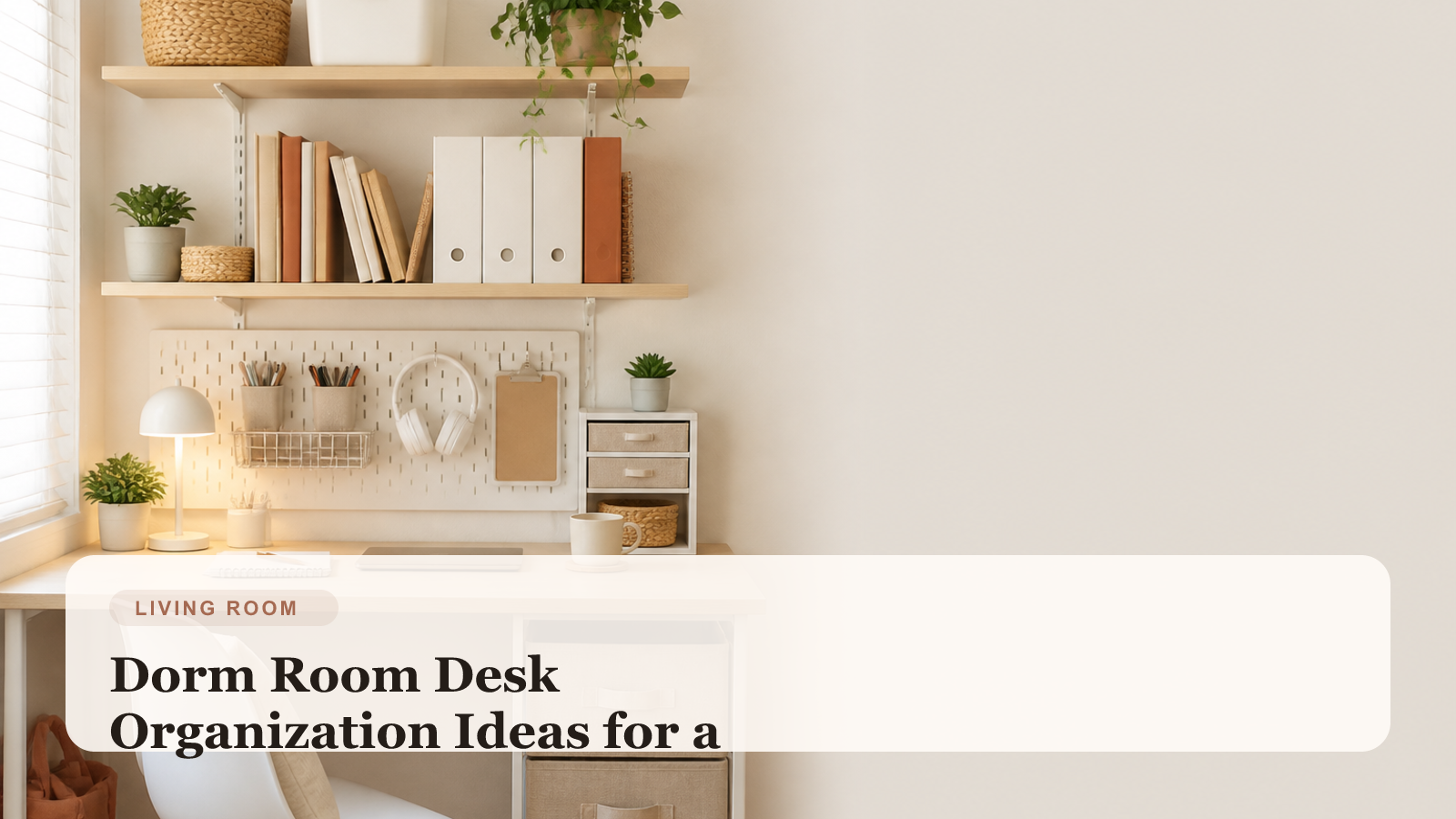
Dorm Room Desk Organization Ideas for a Focused Study Space
Maximize your dorm room desk space with smart organization tips designed for small living areas. Discover budget-friendly storage hacks and routines that keep your study space clutter-free and conducive to focused learning.
Laundry Nook Organization for Apartment Living
Even a hallway washer closet or stacked unit can feel organized when supplies, hampers, and drying tools all have a defined place.
Editorial note
TidyHaven guides are written for practical, renter-aware small-space living. Pages may be updated over time for clarity, freshness, and better real-world usefulness.