
Dorm Room Desk Organization Ideas for a Focused Study Space
Explore practical and renter-friendly dorm room desk organization ideas tailored for small living areas. Learn how to optimize your study space with affordable storage solutions and smart habits to maintain focus and productivity.
Quick takeaways
- Use vertical and under-desk space to maximize storage without sacrificing floor area.
- Choose multifunctional and removable storage solutions suitable for renters.
- Maintain organization with simple daily and weekly habits.
- Prioritize affordable, compact items that fit small desks and limited room layouts.
Understanding Your Dorm Room Desk Constraints and Needs
Dorm rooms typically feature compact desks measuring between 30 to 48 inches wide and 18 to 24 inches deep. These dimensions limit the amount of surface area available, making it important to carefully select and organize essential study materials to avoid clutter. Since dorm rooms are renter-occupied, all organization solutions should be non-permanent and damage-free. Understanding your specific study habits and the types of materials you use daily will help tailor an effective desk organization system tailored to your individual needs.
Maximizing Vertical Space with Shelving and Wall-Mounted Storage
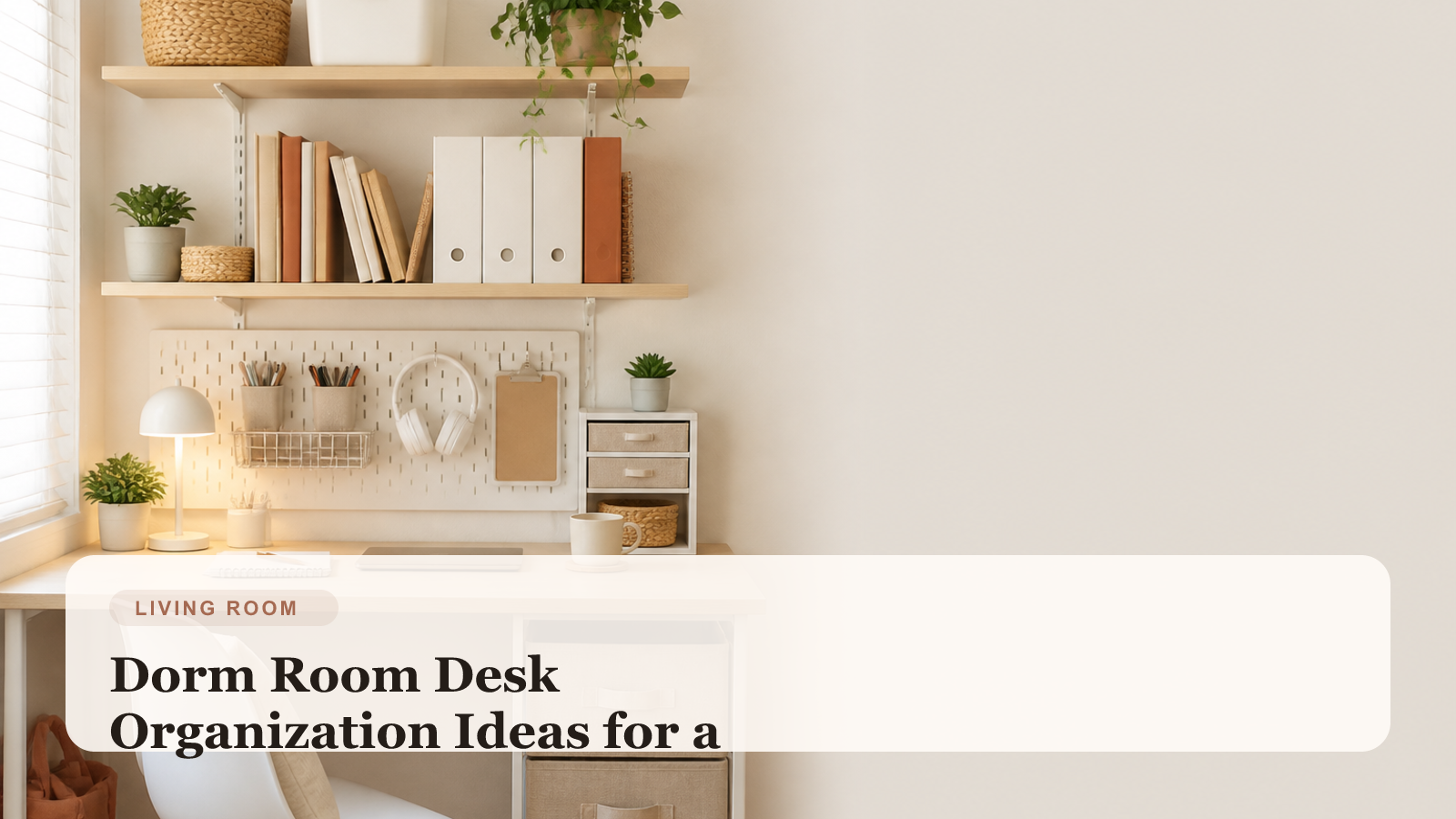
Adding shelves above or beside the desk can free up valuable desktop area. Opt for removable adhesive shelves or tension rod-mounted organizers designed specifically for renters, avoiding any damage to walls. Wall-mounted organizers such as magnetic boards, pegboards, or clip strips keep frequently used items within reach without taking up desk space. These options typically cost under $30 and can be easily relocated or removed at the end of the semester.
- Use command hooks or strips to install lightweight shelves.
- Install a small pegboard for hanging stationery and headphones.
- Add a magnetic dry-erase board for notes and reminders.
- Consider wall-mounted baskets to hold textbooks or notebooks.
Smart Desk Surface Organization: Containers and Layout
Keep the desktop clear by grouping supplies in containers sized to fit your desk dimensions. Small plastic or acrylic organizers with compartments can hold pens, highlighters, and sticky notes without overwhelming the surface. Arrange your study tools according to frequency of use—items used daily should be most accessible, while surplus supplies can be stored in desk drawers or containers beneath the desk to keep the top uncluttered.
- Choose stackable or modular organizers to maximize vertical desktop space (e.g., 10”x5” trays).
- Use drawer dividers or small bins inside desk drawers for categorization.
- Place a small, angled laptop stand to free up space underneath for notebooks.
- Limit desktop items to essentials: computer, notebook, one container for pens.
Utilizing Under-Desk and Auxiliary Storage Options
The space beneath the desk can be optimized with rolling carts, storage bins, or hanging organizers. Select slim-profile carts (under 12 inches wide) that fit your desk’s depth and allow easy access without crowding your legs. Hanging fabric organizers attached to the desk edge or chair back provide extra pockets for cables, chargers, and small supplies, keeping them off your working surface and floor.
- Measure the clearance height under your desk (typically 24-28 inches) to ensure storage units fit comfortably.
- Choose wheeled carts with multiple tiers to separate paper, textbooks, and tech accessories.
- Install clip-on or adhesive hanging pockets for lightweight items like chargers and earbuds.
- Regularly rotate stored materials to keep only current semester items accessible.
Budget-Friendly and Removable Storage Solutions Perfect for Renters
Affordable dorm room organization often relies on multipurpose items from dollar stores or online retailers, such as stackable plastic drawers, fabric bins, and peel-and-stick hooks. These provide versatility and do not require permanent installation. Removable adhesive products protect your dorm walls from damage and can be reused in future living situations. Investing in neutral-colored or transparent organizers helps maintain a clean, cohesive aesthetic without overwhelming a small space.
- Use Command brand hooks and strips for damage-free mounting.
- Utilize clear plastic drawers priced around $10-$15 for easy content visibility.
- Fabric bins with handles under $10 provide lightweight, collapsible storage.
- Repurpose shoe boxes or magazine holders for inexpensive desktop sorting.
Maintenance Habits to Keep Your Study Space Organized and Focused
Consistent small habits prevent desk clutter from accumulating. Dedicate 5 minutes at the end of each study session to return items to their designated containers and tidy any stray papers. Weekly review sessions allow you to reassess what supplies you still need and discard or relocate unnecessary items. These habits ensure your organization system remains functional and your study space stays conducive to focus.
- Set a daily timer for a 5-minute desk cleanup after studying.
- Create a weekly checklist to assess and reorganize supplies.
- Periodically wipe down surfaces and organizers to prevent dust buildup.
- Update your supply inventory each month to avoid overstocking.
Adapting Your Desk Organization as Your Needs Change
Your study materials and habits may evolve throughout the semester. It’s important to remain flexible and adjust your organization system accordingly to maintain efficiency. Consider modular organization pieces that can be easily reconfigured or relocated. This adaptability will save you time and money, ensuring your dorm room desk stays functional regardless of shifting academic demands.
- Swap out or repurpose storage containers as semester priorities change.
- Use modular desk organizers that stack or separate based on need.
- Adjust wall storage layout to accommodate different equipment or supplies.
- Regularly reassess desk layout for ergonomics and space utilization.
Final thought
Creating and maintaining an organized dorm room desk is achievable with renter-friendly, budget-conscious solutions that maximize small spaces. By utilizing vertical and under-desk storage, selecting multipurpose and removable organizers, and establishing simple maintenance routines, students can cultivate a focused and efficient study environment. Adapting these strategies to your unique space and evolving needs will help sustain productivity throughout the academic year without overwhelming your limited room.
Keep reading
Related guides worth reading next
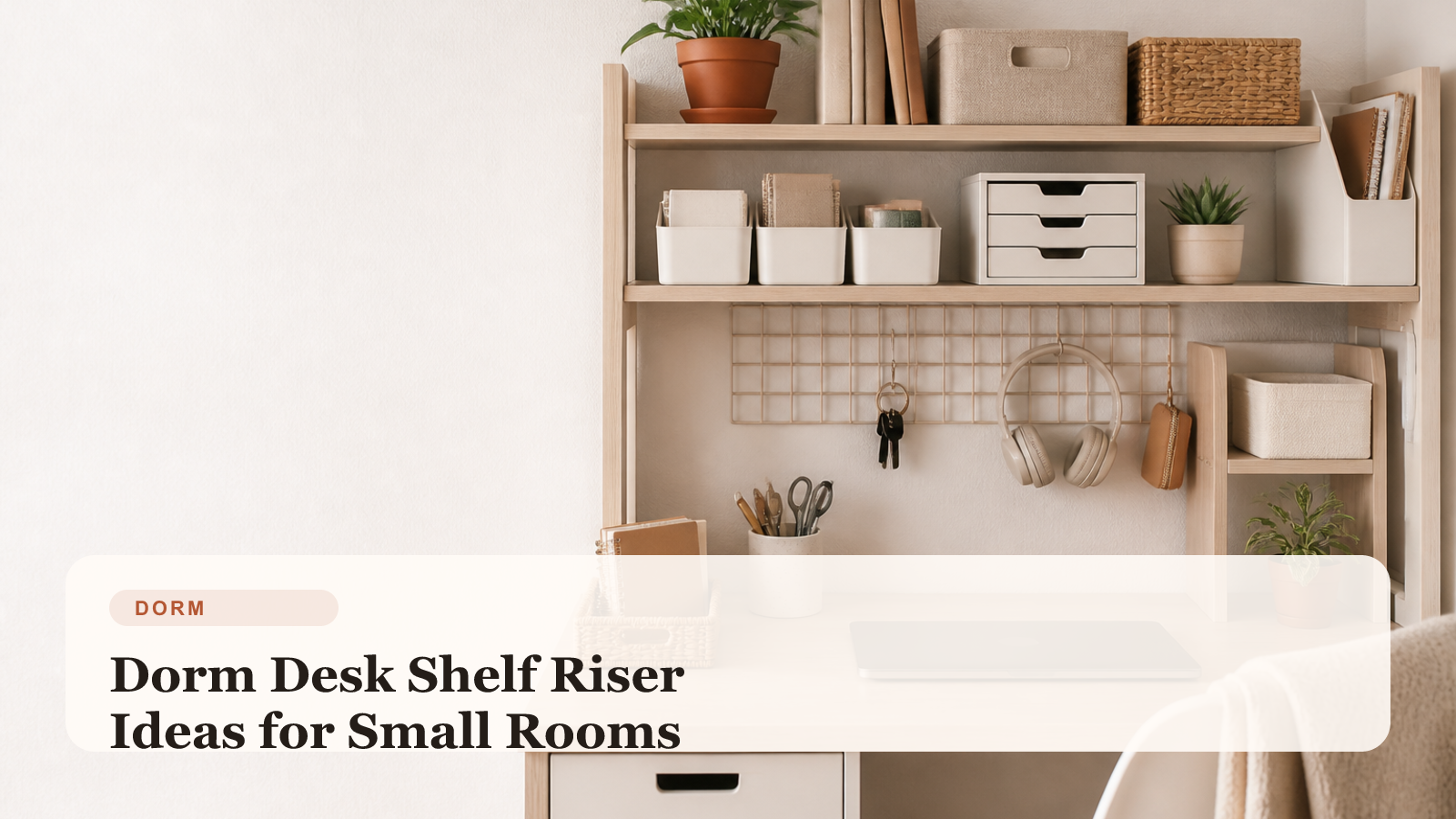
Dorm Desk Shelf Riser Ideas for Small Rooms
This guide focuses on one smart dorm desk upgrade: how a shelf riser can create more storage without turning a tiny study setup into visual clutter.

Dorm Move-In Packing Zone Ideas for Small Rooms
This guide focuses on one stressful dorm moment: how to build a packing zone that keeps move-in supplies, bedding, toiletries, and daily essentials easier to manage.

Dorm Shoe Storage Ideas for Small Rooms
This guide focuses on one common dorm mess: how to organize shoes so the floor stays clearer and the room feels easier to keep tidy.
Editorial note
TidyHaven guides are written for practical, renter-aware small-space living. Pages may be updated over time for clarity, freshness, and better real-world usefulness.