
Dorm Closet Shelf Divider Ideas for Small Rooms
Organize dorm closet shelves with simple dividers, folded clothing zones, and small-room storage habits that stop stacks from collapsing.
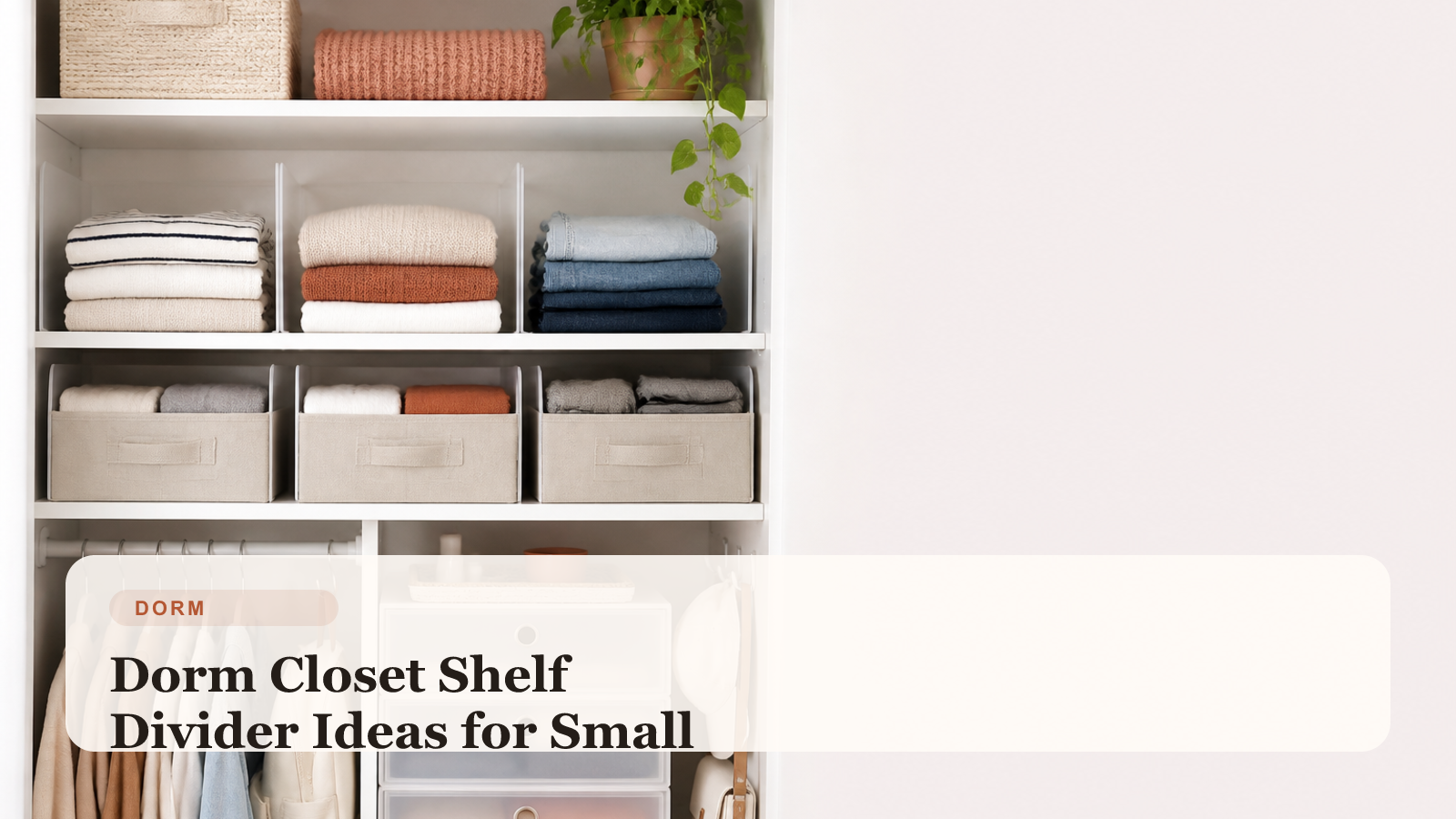
Quick takeaways
- Shelf dividers work best when each shelf has only a few clear clothing categories.
- Smaller folded stacks stay neater longer than oversized piles.
- Closet shelves need visual boundaries so shared or tiny spaces do not collapse into one another.
- A little empty shelf space helps folded storage stay stable.
Dorm closet shelves often start out looking manageable because they feel like open, usable storage. Then clothing stacks get taller, towels mix with sweaters, laundry overflow lands on the same shelf, and the neat folded system breaks down faster than expected.
That is why shelf dividers can help so much in a small dorm closet. They create visible boundaries that keep folded stacks from leaning into each other and make the shelf easier to scan. In a room with limited storage, that kind of structure matters because even a small collapse can spread clutter into the rest of the room.
This guide focuses on one clear search intent: dorm closet shelf divider ideas for small rooms. The goal is to use dividers and category planning to make shelves easier to maintain without pretending a tiny dorm closet needs a complicated boutique-style setup.
Decide what belongs on the shelves first
Shelf dividers only help when the shelf categories make sense. If every shelf is trying to hold unrelated items, the dividers will not solve the core problem.
Good dorm shelf categories often include:
- T-shirts or tops
- sweatshirts or sweaters
- towels
- workout clothes
- pajama or lounge sets
- one small basket for accessories
It usually works less well to mix:
- clothing and random papers
- clean stacks and laundry overflow
- towels with many small loose items
- daily clothing with bulky backup storage
The more focused the shelf category, the more useful the divider becomes.
Use dividers to create smaller stacks, not bigger ones
One mistake with shelf dividers is treating them as permission to stack clothes even higher. The better use is the opposite. Dividers help create smaller, more stable sections that are easier to maintain.
A good divided shelf might hold:
- two or three medium shirt stacks
- one sweater stack and one towel stack
- one clothing stack and one accessory basket
When stacks stay shorter, they are easier to pull from without collapsing. The divider becomes a support system, not just a way to hold more volume.
Give each shelf one broad job
Dorm closet shelves work better when each one has a simple role.
For example:
- top shelf for less-used or seasonal items
- middle shelf for most-used folded clothing
- lower shelf for easier daily access or baskets
This helps because different shelf heights support different habits. The most-used items should be where you can see and grab them without disturbing the whole closet.
If the shelf system already feels crowded, changing the job of one shelf often helps more than buying more organizers.
Keep folded categories visually distinct
Shelf dividers work best when the categories on each side look clearly different from one another. If both sections are overloaded with similar-looking clothes, it becomes harder to tell where one stack ends and the next begins.
This is where clear categories help:
- one divider section for T-shirts
- one for pajamas
- one for towels
- one for sweatshirts
If you need more categories than that, it may be a sign that too much is staying on the shelf instead of being reduced, rotated, or moved elsewhere.
Use baskets with dividers when small items need a home
Not every shelf section should be a folded clothing stack. Baskets can pair well with shelf dividers when the shelf also needs to hold:
- socks
- small accessories
- belts or scarves
- extra washcloths
- soft personal items that do not stack well
This keeps the shelf from becoming half-folded stacks and half-loose clutter.
If a category does not fold neatly, a basket often works better than forcing it into a stack that quickly falls apart.
Leave some breathing room on the shelf
Closet shelves become frustrating when every inch is packed. Dividers can support structure, but they cannot fix shelves that are simply too full.
It helps to:
- leave a little horizontal space between major categories
- avoid pushing stacks up to the top of the divider
- keep one section less full if you use it often
This small amount of breathing room makes the shelf easier to scan and easier to reset. In a tiny dorm closet, that extra access is often more useful than squeezing in one more pile of clothes.
Keep roommate overlap out of the shelf system when possible
If part of the closet is shared or visually close to another person’s area, dividers help most when they support clearly personal sections instead of mixed use.
That could mean:
- one shelf section for one roommate
- one shelf section for the other
- or one clearly personal shelf and one clearly shared towel or supply area
The more obvious the boundary, the less often stacks drift into each other and create confusion.
Reset stacks before they start to lean
Folded shelves rarely collapse all at once. They usually start to fail slowly when people pull from the middle, toss a clean item on top, or add one extra category to an already full section.
A short shelf reset helps:
- refold any leaning stack
- move misplaced items back to the right section
- reduce stack height if it is getting unstable
- empty any basket that has become miscellaneous clutter
- check whether one category has outgrown its divider section
This keeps the system practical instead of decorative only.
What to avoid with dorm shelf dividers
Some habits make shelf dividers less effective right away.
Avoid:
- treating dividers as a reason to overstuff shelves
- mixing too many categories on one shelf
- building stacks that are too tall to stay stable
- keeping loose accessories without baskets
- ignoring shelves until the whole section collapses
Dividers are strongest when they support fewer, clearer categories.
Final thought
Dorm closet shelf divider ideas work best when the dividers create calm, visible boundaries for folded clothing instead of just cramming more onto the shelf. Smaller stacks, stronger category choices, and a little breathing room can make a small dorm closet feel easier to use every day. When shelves stop collapsing into one another, the rest of the room usually feels more manageable too.
Keep reading
Related guides worth reading next
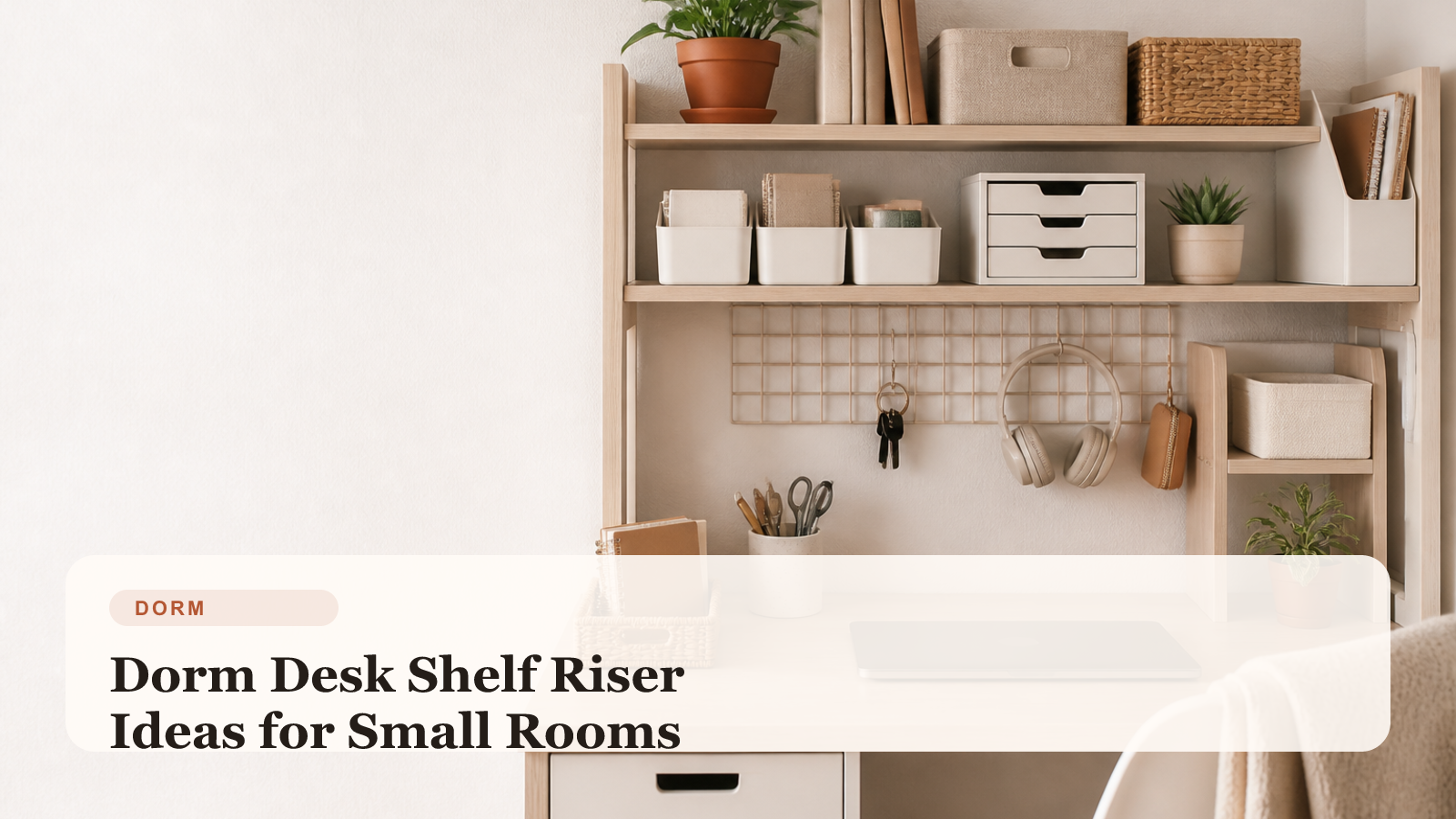
Dorm Desk Shelf Riser Ideas for Small Rooms
This guide focuses on one smart dorm desk upgrade: how a shelf riser can create more storage without turning a tiny study setup into visual clutter.
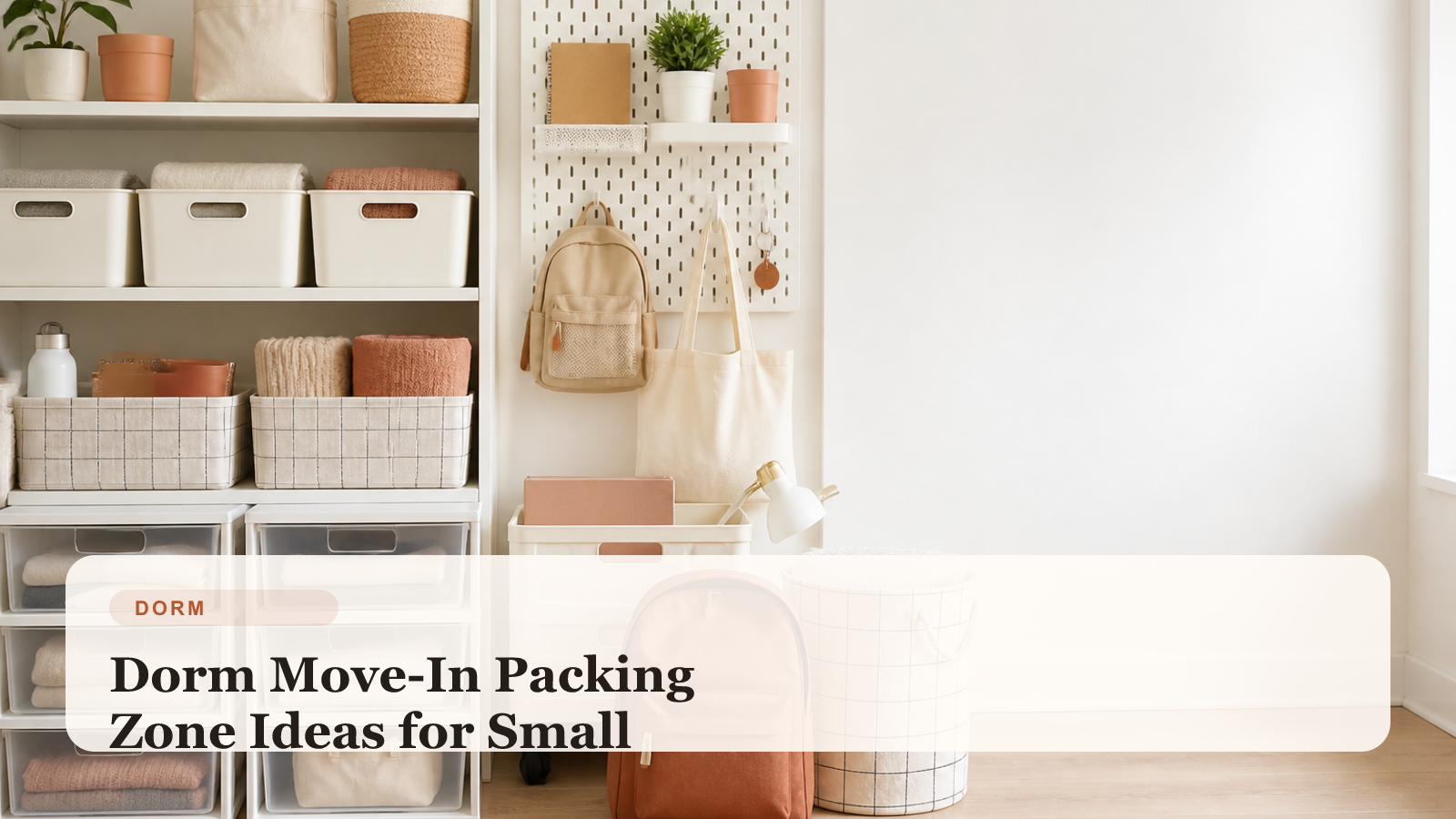
Dorm Move-In Packing Zone Ideas for Small Rooms
This guide focuses on one stressful dorm moment: how to build a packing zone that keeps move-in supplies, bedding, toiletries, and daily essentials easier to manage.
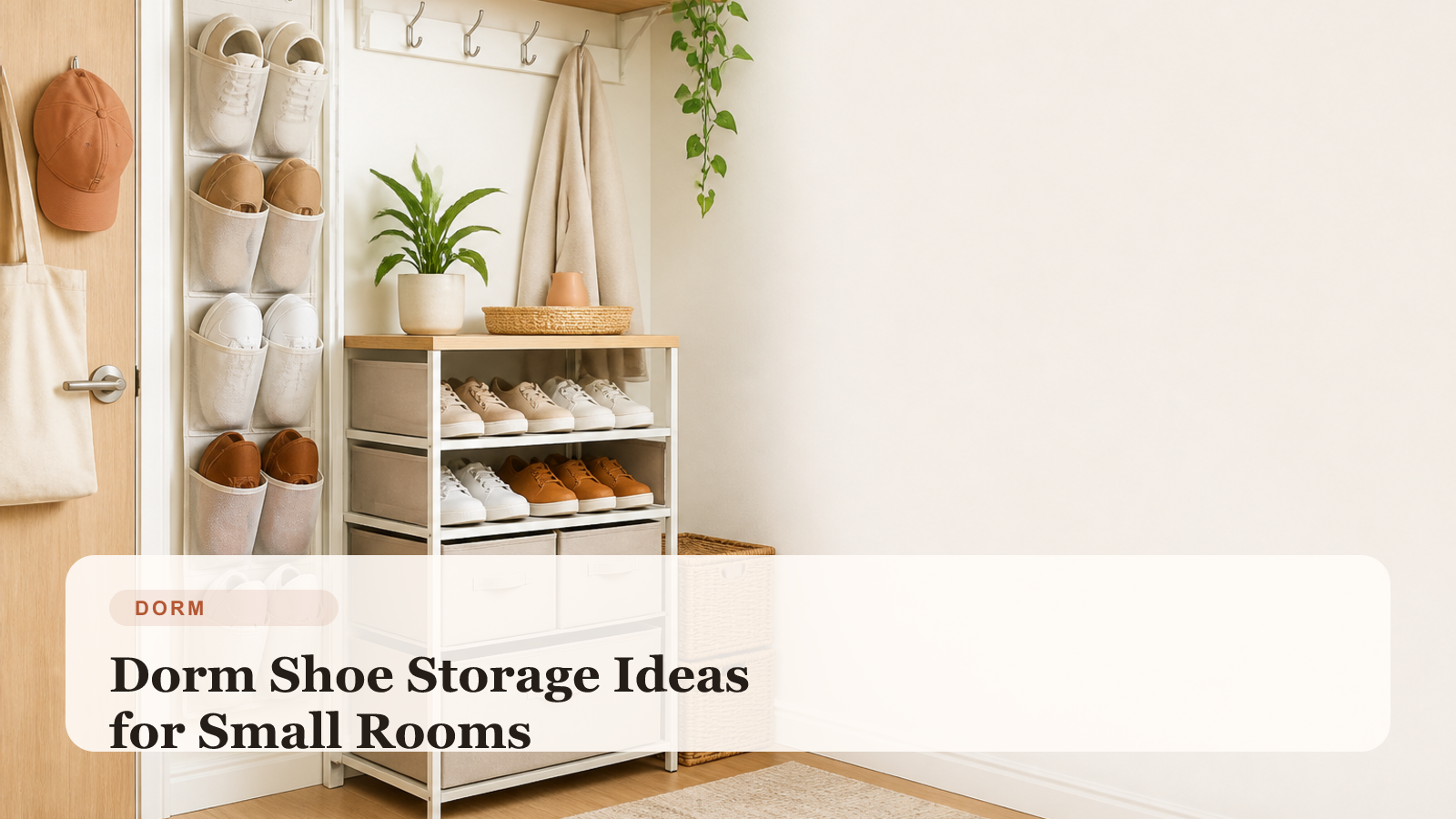
Dorm Shoe Storage Ideas for Small Rooms
This guide focuses on one common dorm mess: how to organize shoes so the floor stays clearer and the room feels easier to keep tidy.
Editorial note
TidyHaven guides are written for practical, renter-aware small-space living. Pages may be updated over time for clarity, freshness, and better real-world usefulness.