
Dorm Shoe Storage Ideas for Small Rooms
Store shoes neatly in a small dorm room with low-profile bins, simple categories, and cleaner floor routines that reduce clutter fast.
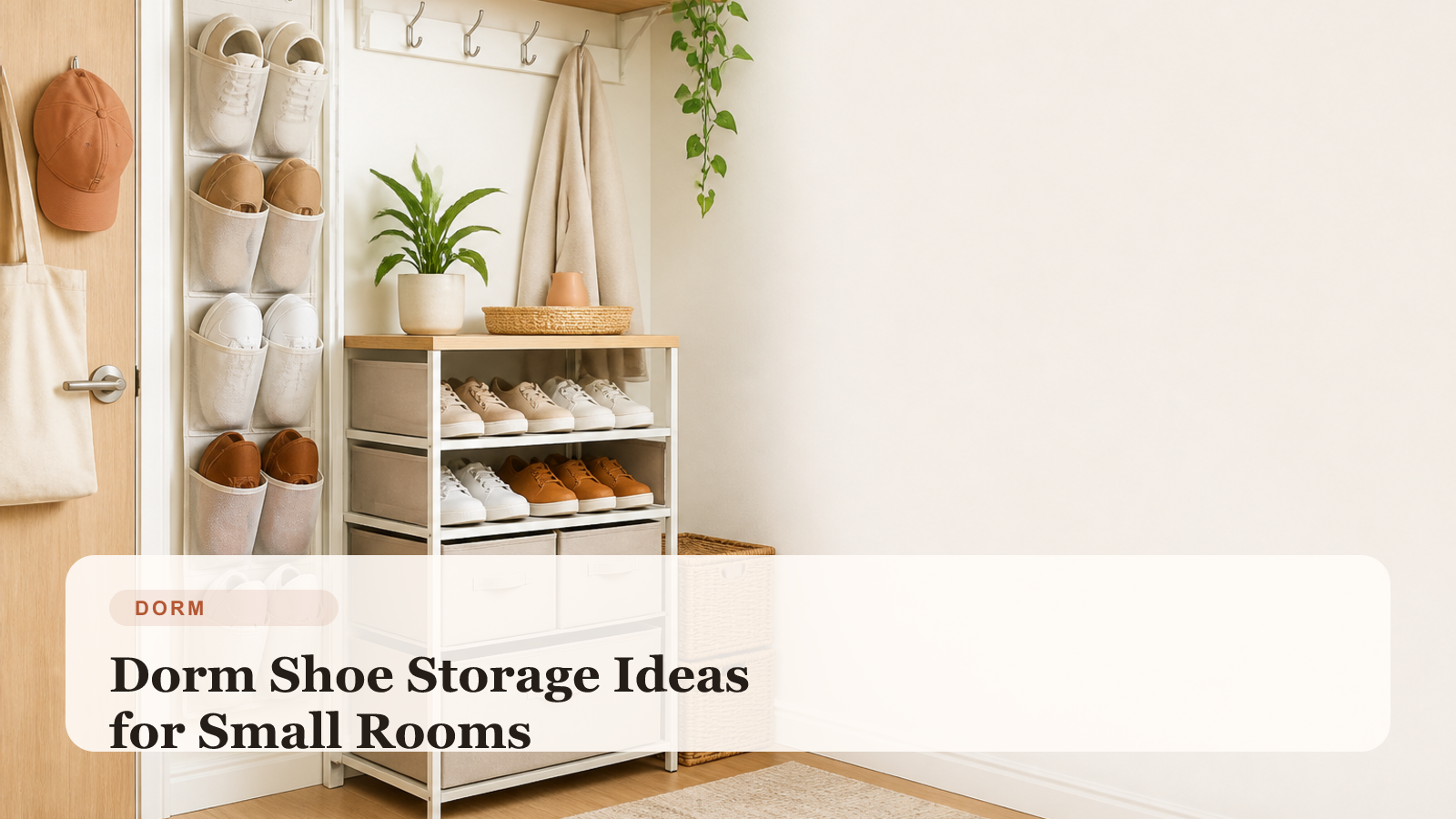
Quick takeaways
- Shoe storage works best when daily pairs are easy to grab and occasional pairs are moved out of the way.
- Small dorm rooms need low-profile or vertical shoe solutions instead of loose floor piles.
- A shoe limit often helps more than buying bigger storage.
- Cleaner floor space makes the whole dorm feel calmer faster.
Shoes are one of the fastest ways a dorm room starts looking messy. A couple of pairs by the bed turns into a line of sneakers near the desk, shower shoes end up by the door, and suddenly the floor feels crowded even when the rest of the room is reasonably organized.
That is why dorm shoe storage matters. A better setup protects walking space, makes the room easier to clean, and helps the dorm feel calmer without needing much extra furniture.
This guide focuses on one clear search intent: dorm shoe storage ideas for small rooms. The goal is to create a shoe system that fits the reality of dorm life, including limited floor space, shared rooms, and quick daily routines.
Decide how many pairs need front-row storage
Most dorm shoe clutter comes from keeping too many pairs in active reach. In reality, the room usually only needs easy access to:
- one or two daily pairs
- shower shoes
- one weather-specific pair if needed
The rest can move into lower-priority storage.
This matters because the room feels more crowded when every pair competes for visible floor space.
Keep the daily zone near the natural exit path
The most-used shoes should live where putting them on feels easy:
- by the door
- under a bench if there is one
- in one low bin near the room entrance
- on one shelf near the closet
If the daily pair is too hidden, shoes start drifting back onto the floor.
Use low-profile storage when the room is tight
Dorm rooms usually respond better to shoe storage that stays low and out of the main sightline.
Useful options include:
- shallow bins
- under-bed shoe containers
- a narrow floor rack
- one short basket for soft shoes or sandals
The point is not to create a shoe display. It is to keep the category off the main walking path.
Separate indoor, outdoor, and shower shoes
Not all shoes behave the same way. The category becomes easier when it is split into use-based groups:
- daily outdoor shoes
- shower shoes
- occasional pairs
- gym or sport pairs if needed
This makes the system easier to maintain than one mixed pile where clean and dirty footwear all land together.
Keep occasional pairs out of the floor zone
A small dorm usually does not have room for every shoe to stay visible. Occasional pairs work better:
- under the bed
- on a closet shelf
- in one labeled bin
This helps preserve the floor for the shoes you actually use often.
Use one clear boundary instead of letting shoes spread
Shoe clutter builds because there is often no real line that says where the category begins and ends. A bin, mat, shelf, or rack can help create that boundary.
Even one small visual limit helps:
- one tray
- one mat
- one rack section
- one low basket
When shoes have one obvious home, they are less likely to drift into every open corner.
Match the system to roommate reality
In a shared room, the shoe setup needs enough clarity that both people can use it without crowding each other.
That might mean:
- left side for one roommate, right side for the other
- one shared shower-shoe section
- one under-bed shoe bin per person
A little boundary goes a long way in keeping the category from becoming one shared mess.
Reset the shoe zone before it spreads
Shoes often need only a very short reset:
- return occasional pairs to storage
- clear the floor of anything that drifted out of the zone
- shake out the tray or mat if needed
- move any dirty pair to the right category
These tiny resets protect the room from getting visually crowded fast.
What to avoid with dorm shoe storage
Avoid:
- keeping too many pairs in visible reach
- letting shoes line the wall without a clear boundary
- mixing shower shoes with daily footwear
- using bulky storage that steals too much floor area
- ignoring under-bed or closet options for lower-use pairs
The best shoe setup feels smaller and calmer than the number of pairs you own.
Final thought
Dorm shoe storage for small rooms works best when the category is edited, contained, and built around how often each pair gets used. A low-profile bin, one daily-use zone, and a little separation between categories can make the whole room feel tidier quickly. When shoes stop taking over the floor, the dorm becomes easier to move through and easier to reset.
Keep reading
Related guides worth reading next
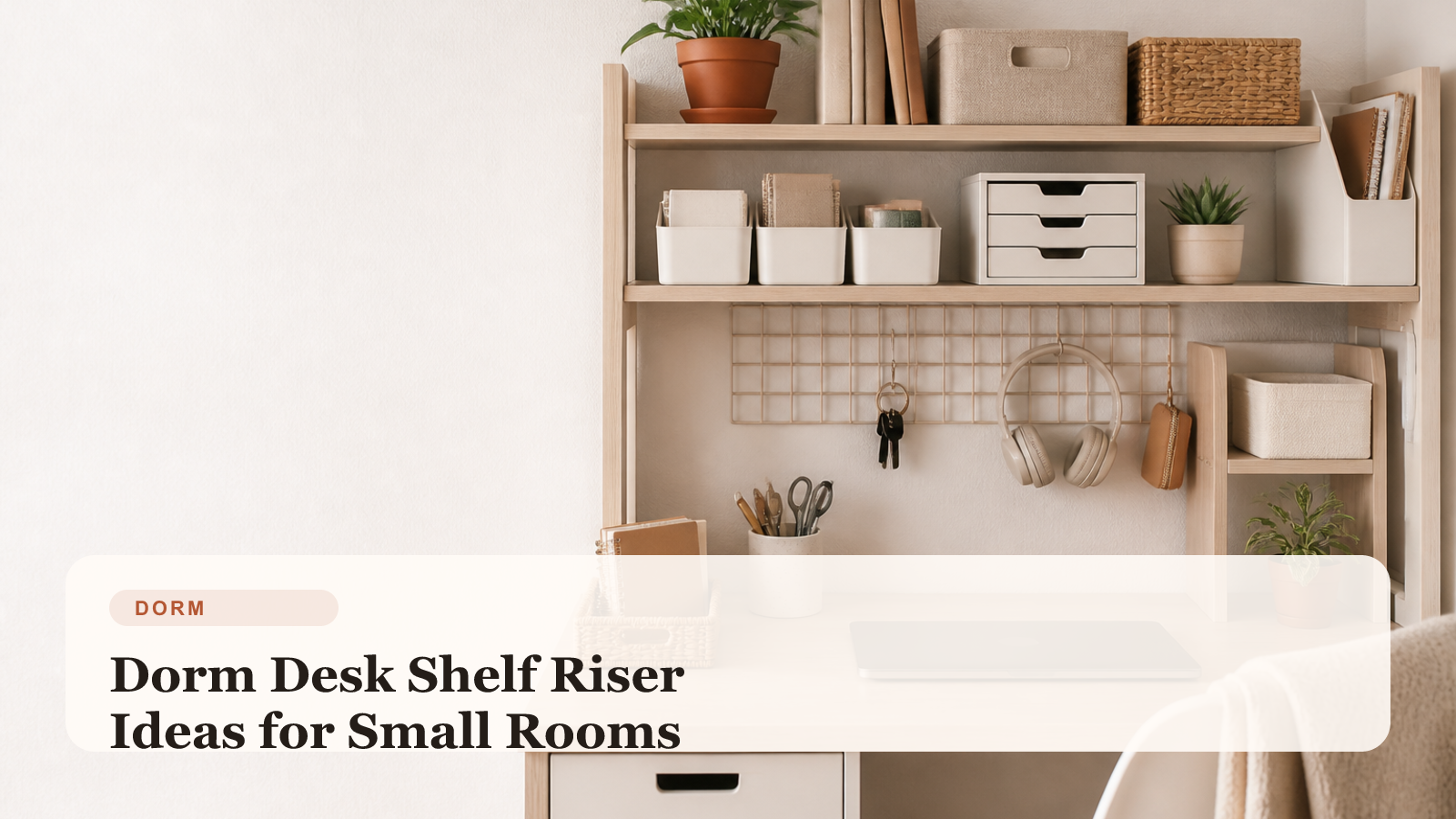
Dorm Desk Shelf Riser Ideas for Small Rooms
This guide focuses on one smart dorm desk upgrade: how a shelf riser can create more storage without turning a tiny study setup into visual clutter.
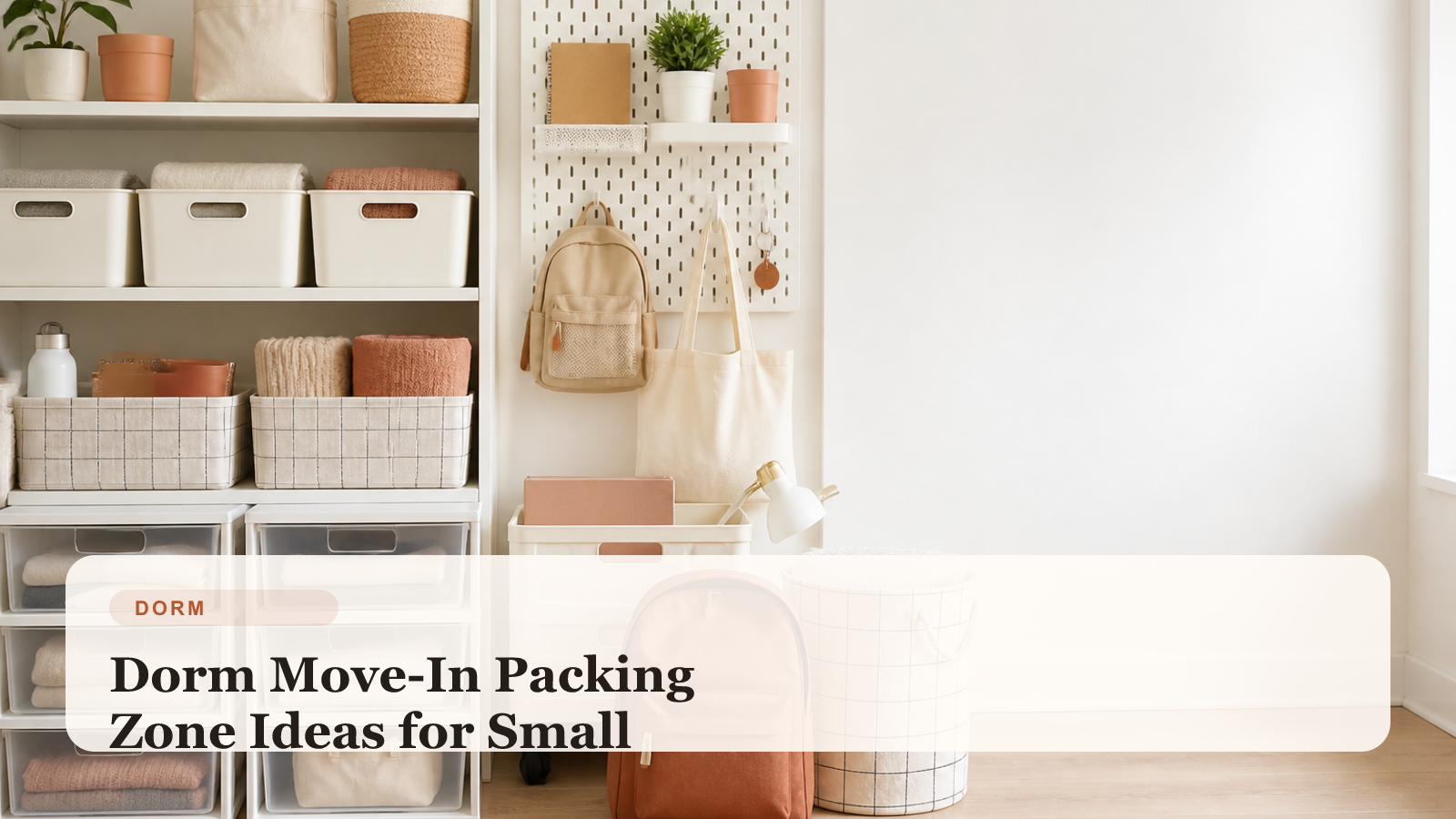
Dorm Move-In Packing Zone Ideas for Small Rooms
This guide focuses on one stressful dorm moment: how to build a packing zone that keeps move-in supplies, bedding, toiletries, and daily essentials easier to manage.
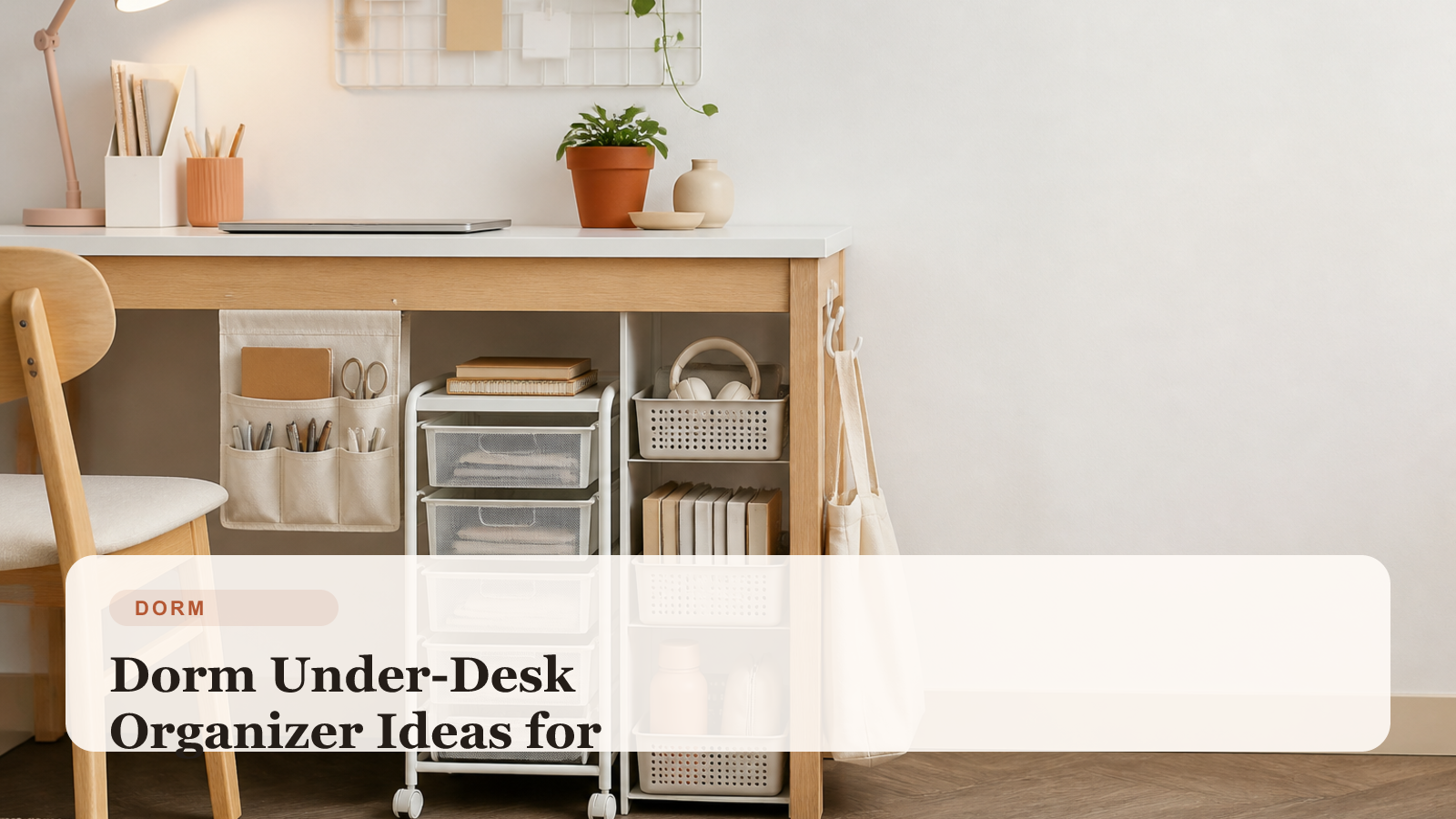
Dorm Under-Desk Organizer Ideas for Small Rooms
This guide focuses on one smart dorm zone: how to use under-desk organizers so study supplies stop spreading across the room.
Editorial note
TidyHaven guides are written for practical, renter-aware small-space living. Pages may be updated over time for clarity, freshness, and better real-world usefulness.