
Dorm Move-In Organization Checklist for Small Rooms
Use this dorm move-in organization checklist to set up storage, shared zones, and daily-use essentials in a small room without creating instant clutter.
Quick takeaways
- Set the storage zones before unpacking everything.
- Protect the walkway, desk, and bed areas first because they affect the whole room.
- Use move-in day to create simple shared rules instead of fixing clutter later.
- A few strong categories work better than a pile of organizers with no plan.
Move-in day creates a lot of clutter very quickly. Bags, bedding, snacks, shoes, hangers, school supplies, and cleaning products all arrive at the same time, and small dorm rooms do not give you much space to sort things casually. That is why the best dorm organization often starts before everything is unpacked.
This guide is designed as a practical dorm move-in organization checklist for small rooms. Instead of treating move-in like one giant shopping problem, it focuses on the storage decisions that actually shape how the room works for the rest of the semester.
The goal is simple: make the room readable from day one so it does not become chaotic by week two.
Before you unpack, measure the room’s pressure points
Before opening every bag, identify the parts of the room that will create the most friction if they stay messy:
- the walkway
- under-bed space
- closet space
- desk surfaces
- any shared snack or mini-fridge area
These are the first zones worth planning because they affect daily life the most. If the path stays clear, the desks are usable, and the main storage zones are defined, the room feels calmer immediately even if everything is not fully styled yet.
On move-in day, take a few minutes to measure:
- under-bed clearance
- closet width
- available shelf depth
- the space each desk really has once lamps and supplies are added
That quick check saves you from forcing bins or organizers into spaces that do not actually fit.
Checklist: set up the room in this order
The easiest way to avoid move-in clutter is to build the room from the largest zones downward.
- Clear the walkway and keep boxes out of it.
- Decide where each person’s bags and laundry belong.
- Set up under-bed storage before loose overflow builds.
- Sort the closet into hanging, folded, and extra storage zones.
- Set up the desk with only current essentials.
- Give shared items one obvious home.
- Break down boxes and remove packing trash before the day ends.
This order matters because it protects the spaces that make the room function. If you unpack in a random sequence, the room fills visually before the systems are in place.
Give under-bed storage a real job
Under-bed space is one of the most valuable storage zones in a dorm room, but it should not become the default place for random extras.
Good move-in categories for under-bed bins include:
- extra bedding
- out-of-season clothing
- backup toiletries
- paper goods
- snacks or bulk drinks
What usually works less well:
- daily clothes
- chargers you use constantly
- loose school supplies
- items without a clear category
Under-bed storage should reduce visible clutter, not create hidden chaos you forget about until finals week.
Build the closet around access, not aesthetics
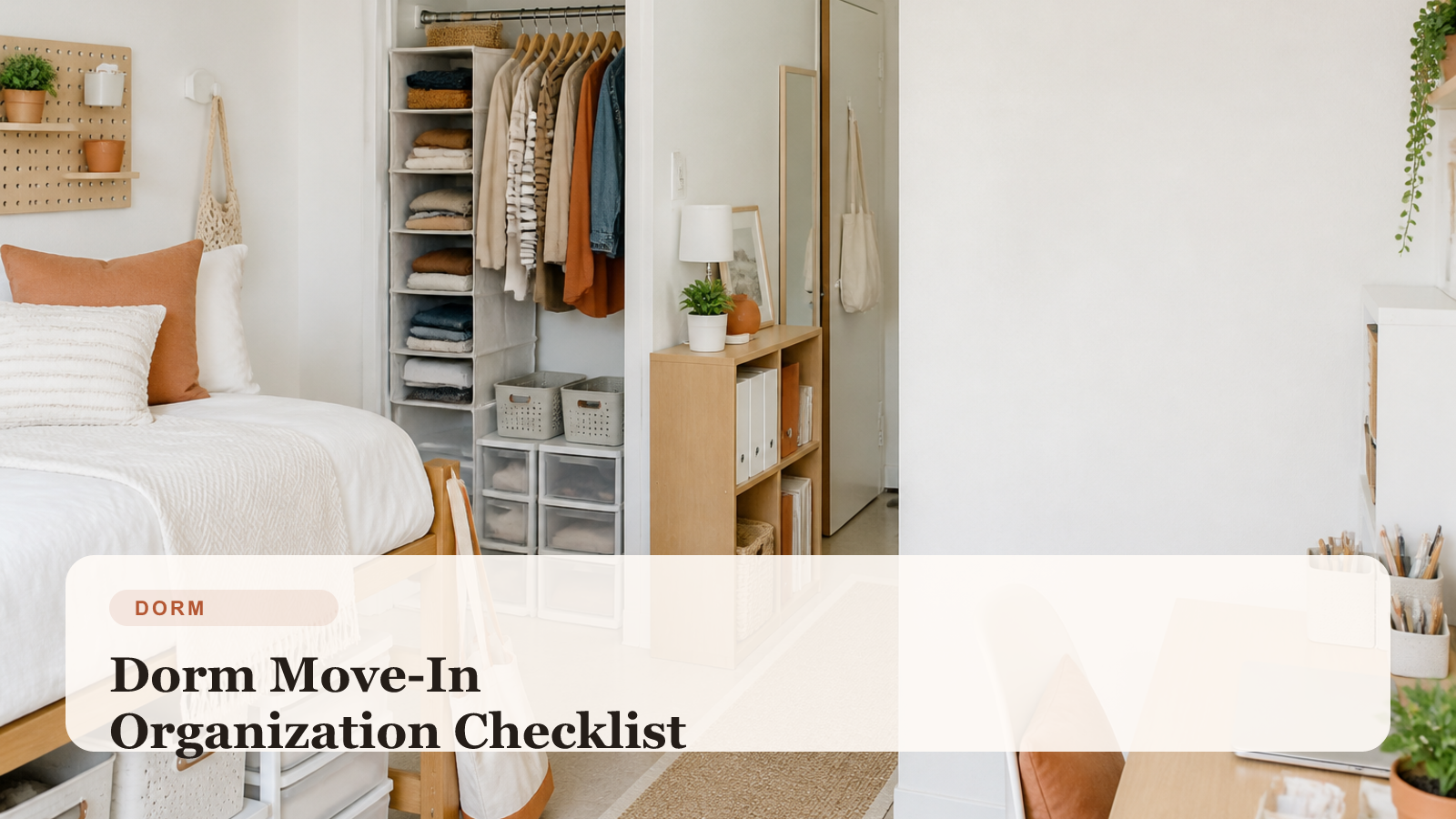
Move-in closet organization is easier when you think about use frequency first. Put daily clothes in the easiest-to-reach space, and move occasional items higher, lower, or into under-bed overflow.
A simple dorm closet setup can be:
- hanging zone for everyday clothes
- top shelf for backup products or low-use items
- floor area for one shoe lane or one soft bin
- one small accessory zone for hats, belts, or bags
You do not need to organize the closet like a full apartment wardrobe. You just need it to make mornings easier and stop clothes from spreading into the room.
Keep desks lighter than you think
One common move-in mistake is overfilling the desk immediately. New dorm setups often look busy because every notebook, cord, snack, and decor item lands there at once.
A better desk checklist is:
- one task light
- one tray or cup for writing tools
- one charging zone
- one paper or notebook holder
- only the supplies you are likely to use this week
Everything else can live in a drawer, shelf, or under-bed bin until you know how you actually study in the room.
This keeps the desk usable and helps the whole room feel less crowded from the beginning.
Decide shared-room rules on move-in day
If you have a roommate, move-in is the easiest time to define simple shared-space expectations before clutter becomes personal.
Good early decisions include:
- how many shoes stay by the door
- where shared snacks live
- whether cleaning supplies are shared or separate
- what counts as shared overflow space
- how often the room gets a quick reset
These do not need to become formal rules. They just need to be clear enough that both people understand how the room is supposed to work.
Use broad categories instead of too many bins
Dorm rooms often look more organized when there are fewer categories, not more. Move-in day is not the moment to overcomplicate everything with a separate container for every tiny item.
Stronger broad categories are:
- school supplies
- toiletries
- snacks
- laundry items
- bedding
- cleaning supplies
If the bins are obvious and labeled, the room stays easier to maintain. If the setup gets too detailed, both people stop following it quickly.
End move-in day with one reset
Before the day ends, do one short reset instead of leaving the room half-organized and half-packed.
That reset should include:
- clearing the walkway
- putting all open packaging in one trash bag
- sliding the under-bed bins fully in
- making the bed
- removing loose items from the desk
- placing shared items in their agreed location
This step is small, but it changes how the room feels. A dorm does not need to be finished on day one. It just needs to be functional enough that the next morning does not begin in clutter.
What to avoid during move-in
Even good organizers can fail if the move-in setup is rushed. Try to avoid:
- unpacking every decorative item before the room functions
- storing daily-use items too far under the bed
- filling the desk with backups instead of active supplies
- letting shared categories stay undefined
- leaving empty boxes and packaging overnight
Move-in organization works better when you start with friction points first and styling second.
Final thought
The best dorm move-in organization checklist is not the one with the most products. It is the one that helps the room become usable quickly. If you protect the walkway, assign under-bed storage on purpose, lighten the desk, and define shared zones early, the room starts the semester with far less stress and far fewer clutter problems.
Keep reading
Related guides worth reading next
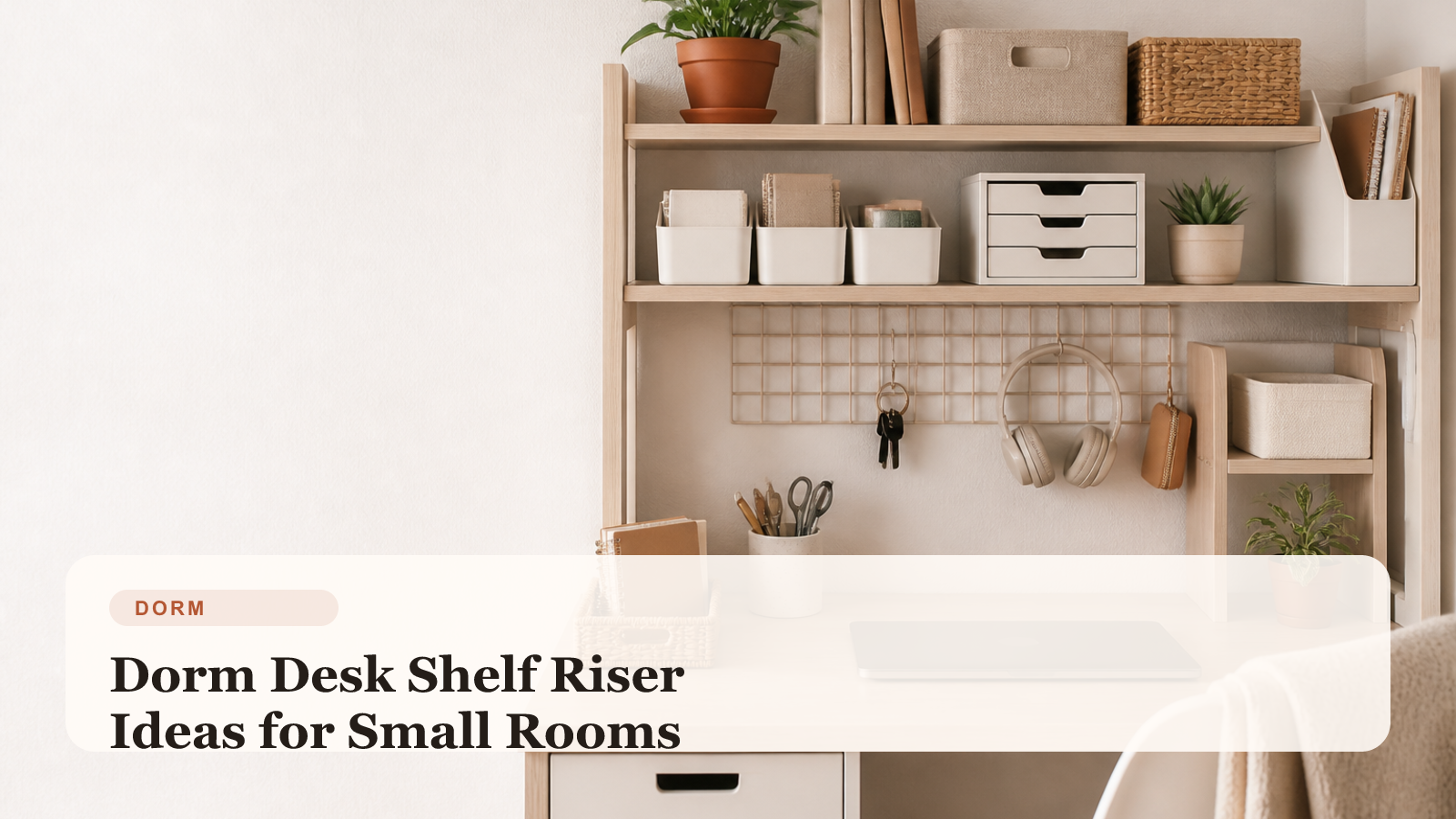
Dorm Desk Shelf Riser Ideas for Small Rooms
This guide focuses on one smart dorm desk upgrade: how a shelf riser can create more storage without turning a tiny study setup into visual clutter.

Dorm Move-In Packing Zone Ideas for Small Rooms
This guide focuses on one stressful dorm moment: how to build a packing zone that keeps move-in supplies, bedding, toiletries, and daily essentials easier to manage.

Dorm Shoe Storage Ideas for Small Rooms
This guide focuses on one common dorm mess: how to organize shoes so the floor stays clearer and the room feels easier to keep tidy.
Editorial note
TidyHaven guides are written for practical, renter-aware small-space living. Pages may be updated over time for clarity, freshness, and better real-world usefulness.