
Dorm Nightstand Organization Ideas for Small Rooms
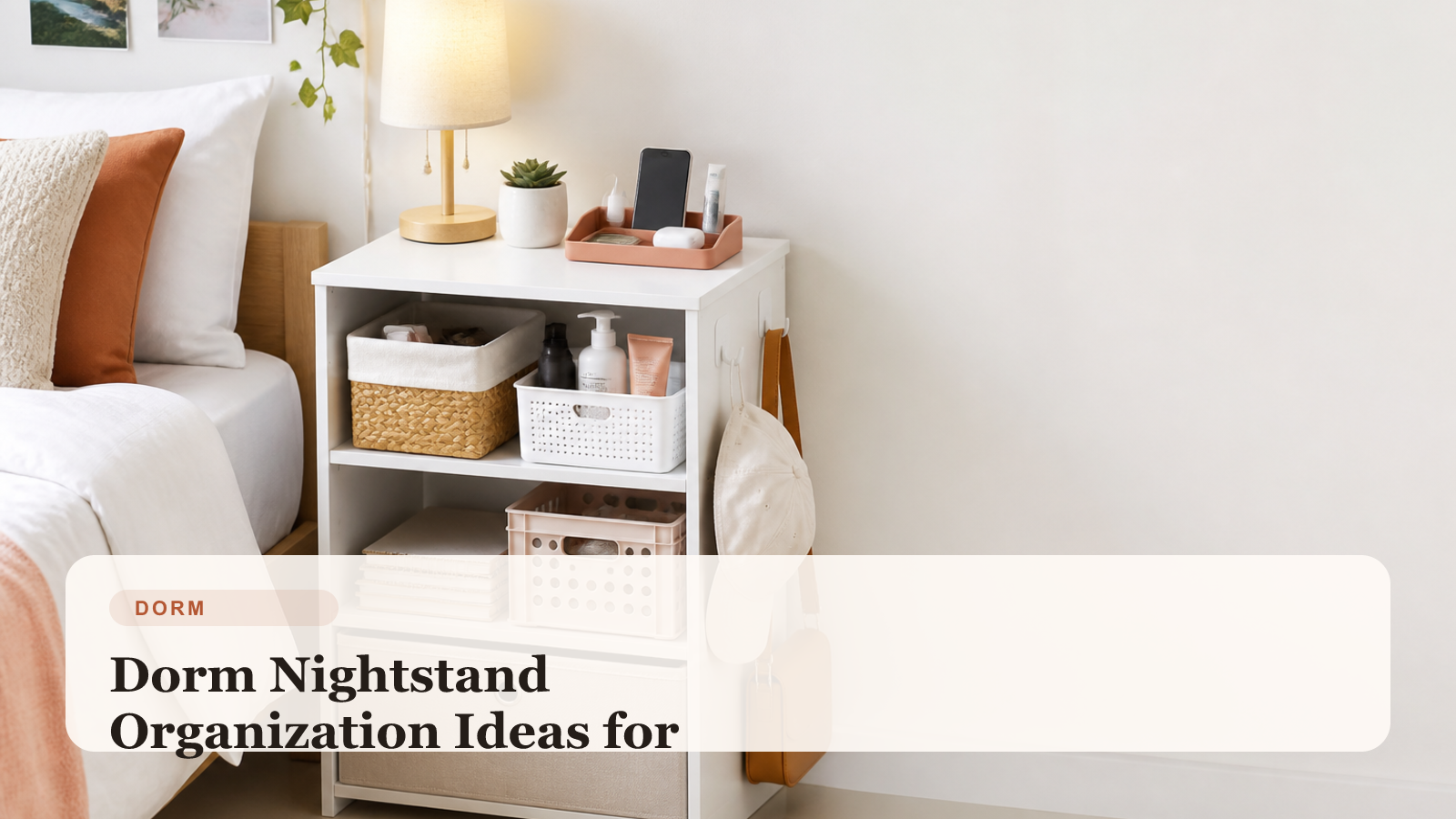
Organize a dorm nightstand with simple trays, charging zones, and small-space habits that keep late-night clutter from taking over.
Quick takeaways
- A dorm nightstand should hold only the items you actually use around bedtime or when you wake up.
- One tray or cup can stop chargers, lip balm, and small extras from drifting into clutter.
- A clear charging zone makes the whole bedside area easier to maintain.
- If the nightstand is full, some categories belong elsewhere in the room.
Dorm nightstands get cluttered faster than most people expect because they collect the easiest-to-drop items in the room. Phones, chargers, water bottles, lip balm, notebooks, headphones, snacks, medicine, and random receipts all tend to land there by default. In a small dorm, that tiny surface can go from useful to stressful in just a few days.
That is why dorm nightstand organization matters. The bed area is one of the most visible zones in the room, and when the nightstand feels messy, the whole room feels less settled. A better setup does not require fancy furniture or lots of organizers. It just needs a clear job for the surface and a few rules about what belongs there.
This guide focuses on one specific search intent: dorm nightstand organization ideas for small rooms. The goal is to make the bedside zone easier to use at night, easier to reset in the morning, and less likely to become one more catch-all spot for clutter.
Decide what the nightstand is actually for
The biggest bedside mistake is treating the nightstand like overflow storage. In a dorm, that usually means the surface starts holding things from completely different routines instead of just bedtime and wake-up essentials.
A good nightstand usually needs room for only a few categories:
- lighting
- charging
- one drink
- one or two bedtime essentials
- one small catch tray for tiny items
That is enough for most students. Once the nightstand starts holding school supplies, extra toiletries, snack stock, laundry items, or a whole stack of loose paper, it stops functioning well.
If you are unsure whether something belongs there, ask: do I use this while getting into bed, during the night, or immediately after waking up? If not, it likely belongs somewhere else.
Create a dedicated charging zone
Chargers are one of the main reasons dorm nightstands feel messy. Loose cables spread across the top, slide behind the bed, or get tangled with everything else. Creating one clear charging zone helps the whole surface stay calmer.
This can be simple:
- one cord routed behind the nightstand
- one small cable clip or wrap
- one fixed spot where the phone rests
- one power strip positioned safely if needed
Try not to let multiple chargers sprawl across the entire tabletop unless they are truly needed there every day. If you charge extra devices like tablets, watches, or headphones, decide which one belongs bedside and which one could charge at a desk instead.
A nightstand works better when the phone and charger have a home rather than simply landing wherever there is room.
Use one tray to control small-item drift
Small items are what make the nightstand look chaotic fastest. Lip balm, hair ties, earbuds, tissues, hand cream, glasses, and medication can all make sense near the bed, but not when they are spread loose across the surface.
That is why one tray or shallow dish is so useful. It gives the smallest items a visible boundary and makes the surface easier to wipe down.
A bedside tray works well for:
- lip balm
- glasses
- earbuds
- hand lotion
- one pen
- nighttime medicine
The tray should stay small. If it grows large enough to hold ten unrelated categories, it stops preventing clutter and starts becoming clutter.
Keep books and notebooks intentional
Some students like keeping a journal, planner, or current book near the bed. That can work well, but only if those items stay limited and have one clear position.
A good rule is:
- one active book
- one notebook or journal
- no loose stack of old papers
If reading material begins stacking up vertically or sliding under chargers and cups, the nightstand starts feeling busy even if the total number of items is not huge.
If you like having several books nearby, store the extras on a shelf, under the bed, or in a desk area instead of forcing the bedside surface to hold them all.
Avoid turning the nightstand into a snack station
In dorm rooms, snacks often drift to the bedside because it feels convenient. The problem is that wrappers, crumbs, bottles, and random food items make the bed zone feel messy and can be harder to clean around.
It is fine to keep:
- one water bottle
- one occasional tea mug
- one small bedtime snack temporarily
It is much less helpful to keep:
- a pile of wrappers
- several drinks at once
- open food containers
- extra snack stock
If you like eating while studying in bed, reset the nightstand right after instead of letting that temporary routine become the permanent surface layout.
Use vertical space if the tabletop is tiny
Some dorm nightstands barely have room for a lamp and phone. If that is your setup, think about vertical organization before adding wider containers.
Useful options can include:
- a lamp with a narrow base
- a slim bedside caddy that hangs from the bed frame
- a narrow cup for pens or glasses
- a clip-on pocket for books or chargers
These work well because they free more surface area without asking the table to do more than it can handle. In very small dorm rooms, bedside hanging pockets are often more effective than trying to crowd everything onto one tiny top surface.
The key is to keep the add-ons minimal. You still want the bedside zone to feel easier, not more crowded.
Separate night items from morning items if needed
If your bedside area supports both bedtime and getting-ready routines, separate the categories so they do not blend together.
Night items might include:
- lip balm
- hand cream
- glasses
- charger
- current book
Morning items might include:
- alarm phone position
- deodorant if you use it immediately
- watch or keys if you grab them while leaving
When these categories overlap too much, the nightstand becomes a general launch pad instead of a calming bedside surface. A small tray for night items and one defined edge for morning essentials is often enough to keep it readable.
Do a one-minute morning reset
Dorm nightstands stay neat when they are reset quickly instead of being reorganized only when they get bad.
A simple morning reset can be:
- throw away any trash or tissue
- return small items to the tray
- move snacks or cups away from the bed area
- coil or straighten one charger
- put books or notebooks back in their assigned spot
That takes almost no time, but it prevents the slow buildup that makes the whole room feel less under control by the end of the week.
What to avoid on a dorm nightstand
Some nightstand habits create clutter immediately.
Avoid:
- keeping multiple random chargers on top
- using the surface as a backup toiletries zone
- stacking receipts, handouts, or loose paper
- storing extra snacks there full time
- adding oversized decor that steals usable space
The best dorm nightstand setups look simple because they are simple. When the surface has one clear job, it becomes much easier to maintain.
Final thought
Dorm nightstand organization works best when the bedside area is treated like a support zone, not a storage bin. A clear charging spot, one small tray, and a limited set of real bedtime essentials can make the whole room feel calmer. In a small dorm, that tiny improvement matters because the bed area is always in view. When the nightstand stays light and intentional, the space around it feels easier to live in.
Keep reading
Related guides worth reading next
Dorm Desk Shelf Riser Ideas for Small Rooms
This guide focuses on one smart dorm desk upgrade: how a shelf riser can create more storage without turning a tiny study setup into visual clutter.

Dorm Shoe Storage Ideas for Small Rooms
This guide focuses on one common dorm mess: how to organize shoes so the floor stays clearer and the room feels easier to keep tidy.

Dorm Move-In Packing Zone Ideas for Small Rooms
This guide focuses on one stressful dorm moment: how to build a packing zone that keeps move-in supplies, bedding, toiletries, and daily essentials easier to manage.
Editorial note
TidyHaven guides are written for practical, renter-aware small-space living. Pages may be updated over time for clarity, freshness, and better real-world usefulness.