
Shared Dorm Room Organization Hacks That Actually Reduce Clutter
Use shared zones, simple labels, under-bed storage, and renter-safe routines to keep a dorm room easier to share without constant mess.
Quick takeaways
- Divide the room into clear shared and personal zones before clutter builds.
- Use broad labeled categories so cleanup stays realistic for two people.
- Protect the walkway, desks, and bed areas first because they affect the whole room.
- A few roommate reset rules work better than complicated storage systems.
Sharing a dorm room can get messy fast because the room is doing twice the work for two different people. Clothes, chargers, snacks, books, shoes, and bags all compete for the same limited footprint. Most of the stress comes from the same problem: there is no clear system for what belongs where.
That is why shared dorm room organization works best when it is simple and visible. You do not need a perfectly matched aesthetic setup. You need enough structure that both roommates can find things, put them away quickly, and avoid turning the room into one big overflow zone by the second week of the semester.
This article focuses on shared dorm room organization specifically. It is not another general dorm storage list. The goal is to help roommates divide space fairly, protect the areas that create the most tension, and set up systems that can actually survive a busy school schedule.
Divide the room into personal zones and shared zones
One of the easiest mistakes in a shared dorm is assuming everything should be organized the same way. In reality, the room works better when it has:
- personal zones that each roommate controls
- shared zones with simple rules
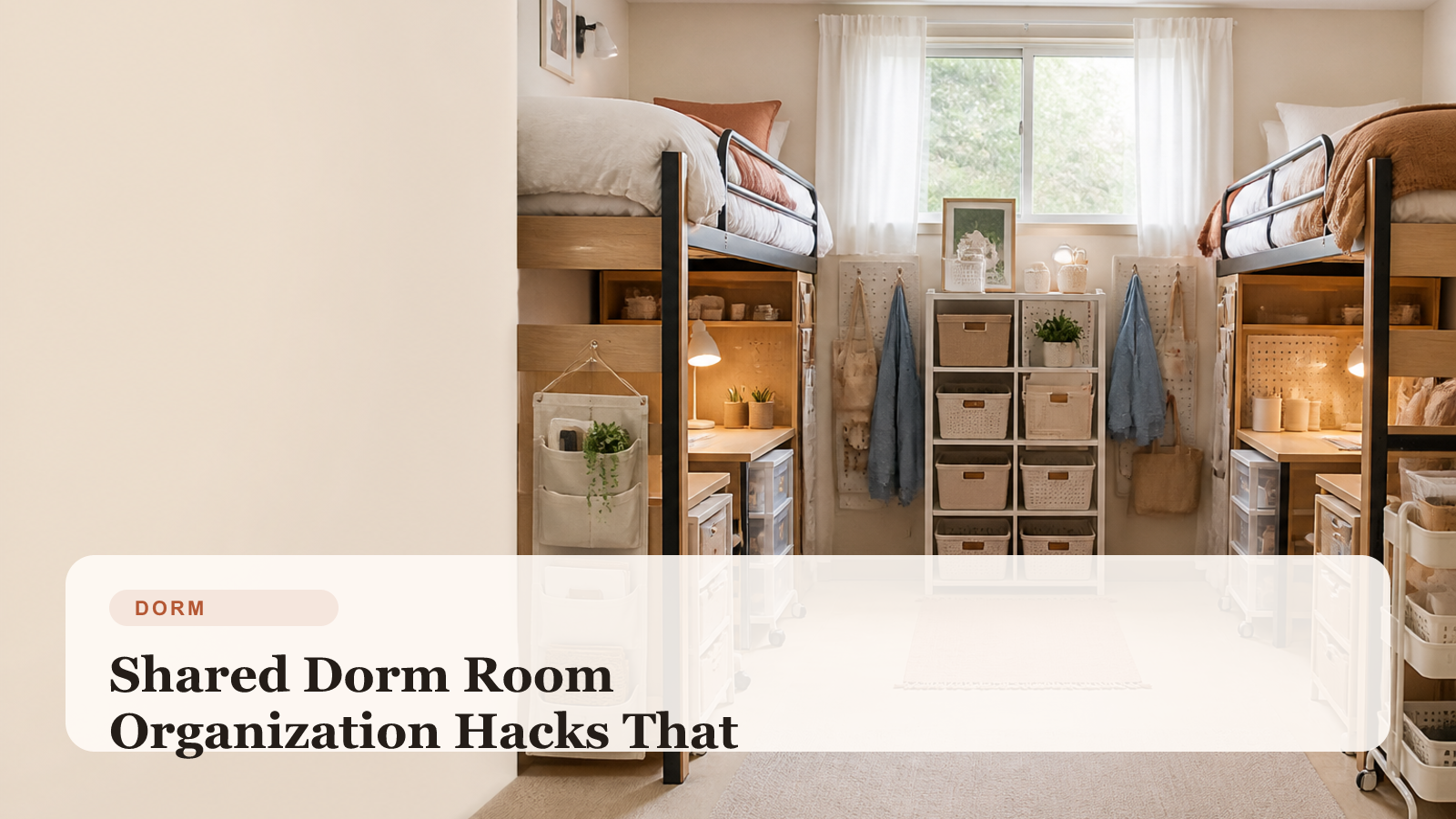
Personal zones usually include each bed area, each desk, and each section of the closet or dresser. Shared zones usually include the walkway, mini-fridge area, snack storage, cleaning supplies, and sometimes under-bed overflow if one side has more clearance.
When these zones are clear from the beginning, fewer arguments turn into “your stuff is everywhere” because the room already has a visible structure.
Protect the walkway first
In a shared dorm, the walkway affects both people all day. If shoes, laundry, bags, or boxes spill into that path, the whole room feels smaller and more stressful immediately.
That is why the walkway should be treated like protected space, not flexible storage. A good rule is that anything placed on the floor should either:
- live fully under a bed
- fit inside a designated shelf or bin
- be temporary and leave the walkway by the end of the day
If the path between the beds, desks, and door stays clear, the whole room feels more manageable even when the rest is not perfect.
Use broad labeled categories instead of tiny systems
Detailed sorting usually fails in a dorm because both people are busy and the room changes quickly through the semester. Broad categories work better because they are easier to maintain.
Good shared-room categories include:
- snacks
- cleaning supplies
- extra toiletries
- chargers and tech accessories
- paper goods
- laundry items
One labeled bin or basket per category is usually enough. That keeps shared storage readable without forcing either roommate to remember an overly precise system.
If the room starts accumulating random loose items, it is often a sign that the categories are too narrow or too numerous.
Use under-bed storage intentionally
Under-bed space is some of the most valuable storage in a shared dorm, but it works best when it is assigned on purpose instead of becoming a dumping area.
Use it for:
- out-of-season clothes
- extra bedding
- backup toiletries and paper goods
- bulk snacks or drinks
- less-used school supplies
If one roommate has a lofted bed or higher clearance, talk about whether that creates a shared overflow zone or remains personal space. The goal is not to split everything perfectly evenly. It is to make sure the room feels fair and functional.
Clear bins or fabric containers with labels help here because both people can tell what is inside without pulling everything out.
Keep desks separate, not shared
Shared dorm rooms usually work better when the desks are treated as strictly personal zones. Desk clutter is closely tied to stress and productivity, so it helps to reduce overlap.
Each roommate should keep:
- their own chargers and study tools
- their own paper and notebook storage
- one trash or recycling routine for desk clutter
If there is a printer, lamp, or other shared desk-adjacent item, give it one agreed home instead of letting it float between both sides of the room.
This matters because desks become visual anchors in a dorm. When they look chaotic, the entire room feels less under control.
Set one simple roommate reset routine
The best shared-room systems are supported by a short reset routine, not by buying more organizers. Try a five-minute reset once a day or at least a few evenings a week.
That reset can be as simple as:
- clear the walkway
- return snacks and shared supplies to their bins
- put laundry back in hampers
- throw away packaging or loose paper
- reset the mini-fridge or shared counter surface
This kind of routine works because it focuses on visible friction first. It also keeps resentment lower, since both people can see what “reset” means without debating every item.
Create roommate rules for the highest-friction categories
Most shared dorm stress comes from a few repeating categories, not the whole room. Good roommate rules usually target:
- shoes near the door
- food and snack overflow
- late-night desk clutter
- shared cleaning supplies
- wet towels or gym gear
Try to agree on a few basics early:
- how many pairs of shoes stay by the door
- where shared food lives
- who buys and stores cleaning items
- what cannot stay in the walkway overnight
These rules do not need to feel formal. They just need to make storage expectations obvious enough that the room does not drift into chaos.
Use storage that can adapt mid-semester
Dorm rooms change quickly once classes, weather, and routines settle in. That is why flexible storage matters more than rigid solutions.
Look for:
- soft bins that can move between shelf and floor
- over-the-door organizers
- under-bed containers with handles
- slim carts or stackers that can shift roles
A storage piece that works for snacks in September might work better for winter accessories or extra study supplies later. That kind of flexibility is especially useful in shared rooms where needs rarely stay fixed for long.
Final thought
Shared dorm room organization works best when roommates make the room easier to read, not just fuller of organizers. Clear personal zones, broad shared categories, under-bed planning, and a short reset routine do more to reduce clutter than complicated systems ever will. If both roommates can tell where things belong and keep the walkway open, the room becomes much easier to live in all semester.
Keep reading
Related guides worth reading next
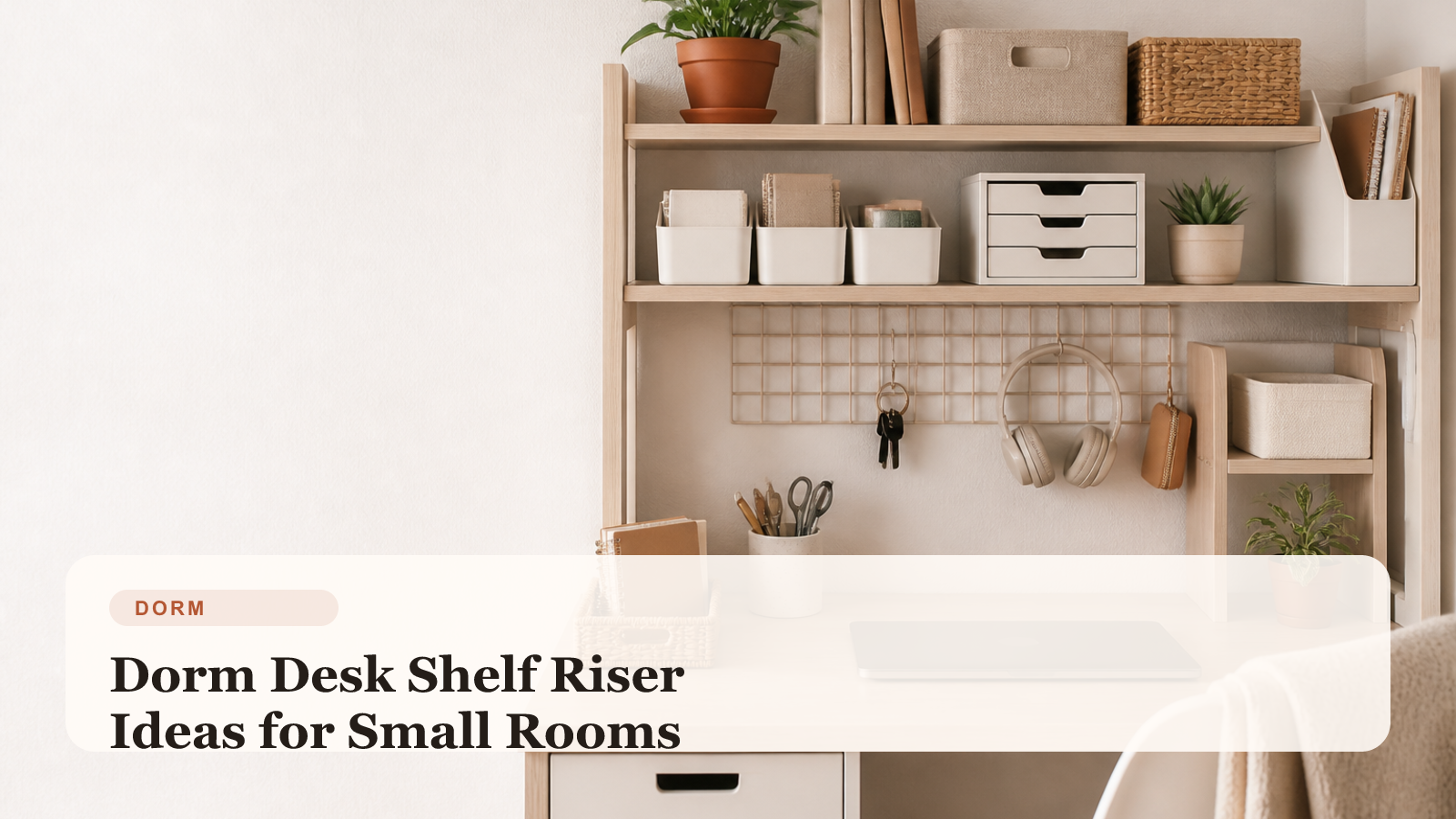
Dorm Desk Shelf Riser Ideas for Small Rooms
This guide focuses on one smart dorm desk upgrade: how a shelf riser can create more storage without turning a tiny study setup into visual clutter.
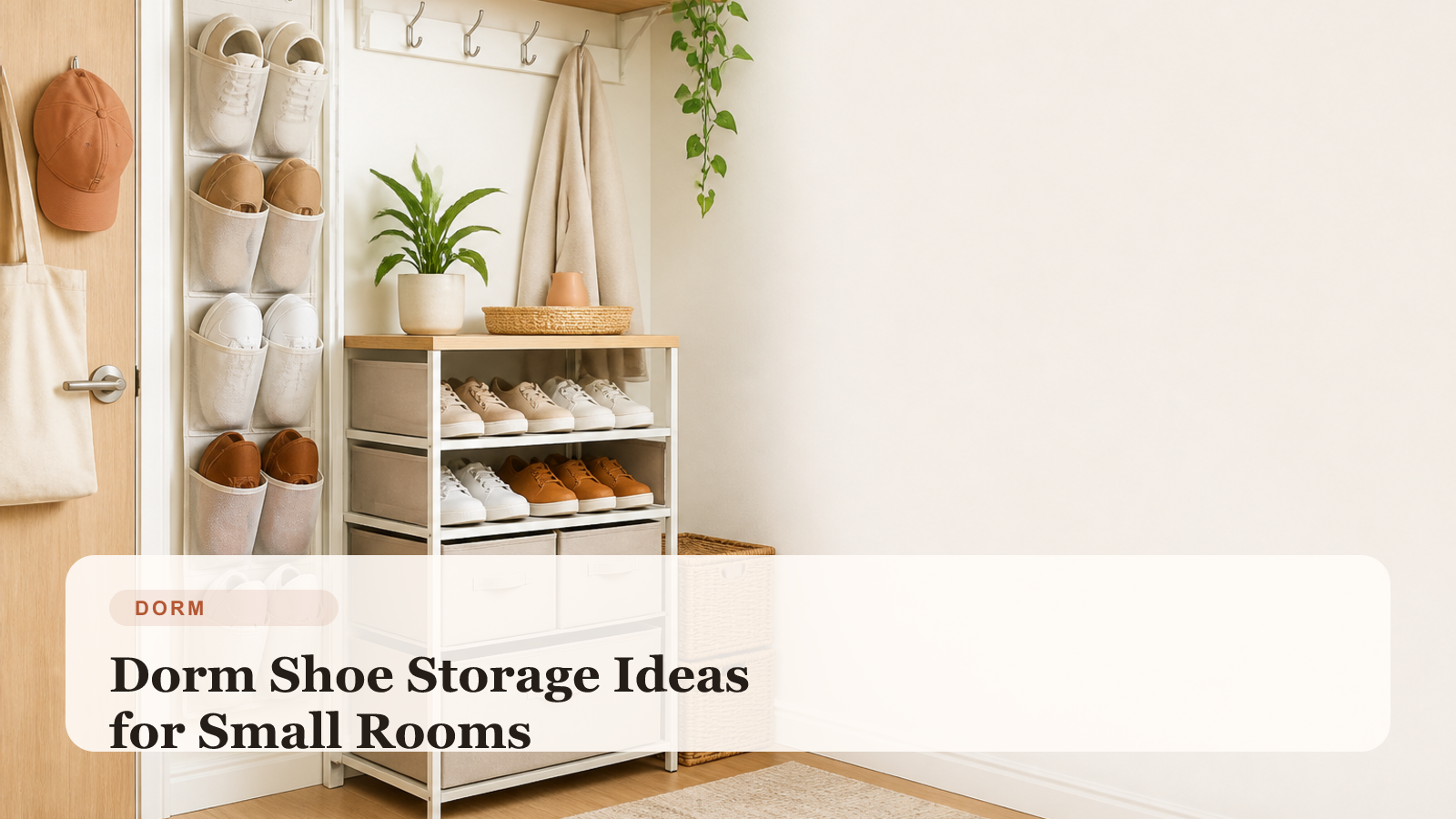
Dorm Shoe Storage Ideas for Small Rooms
This guide focuses on one common dorm mess: how to organize shoes so the floor stays clearer and the room feels easier to keep tidy.
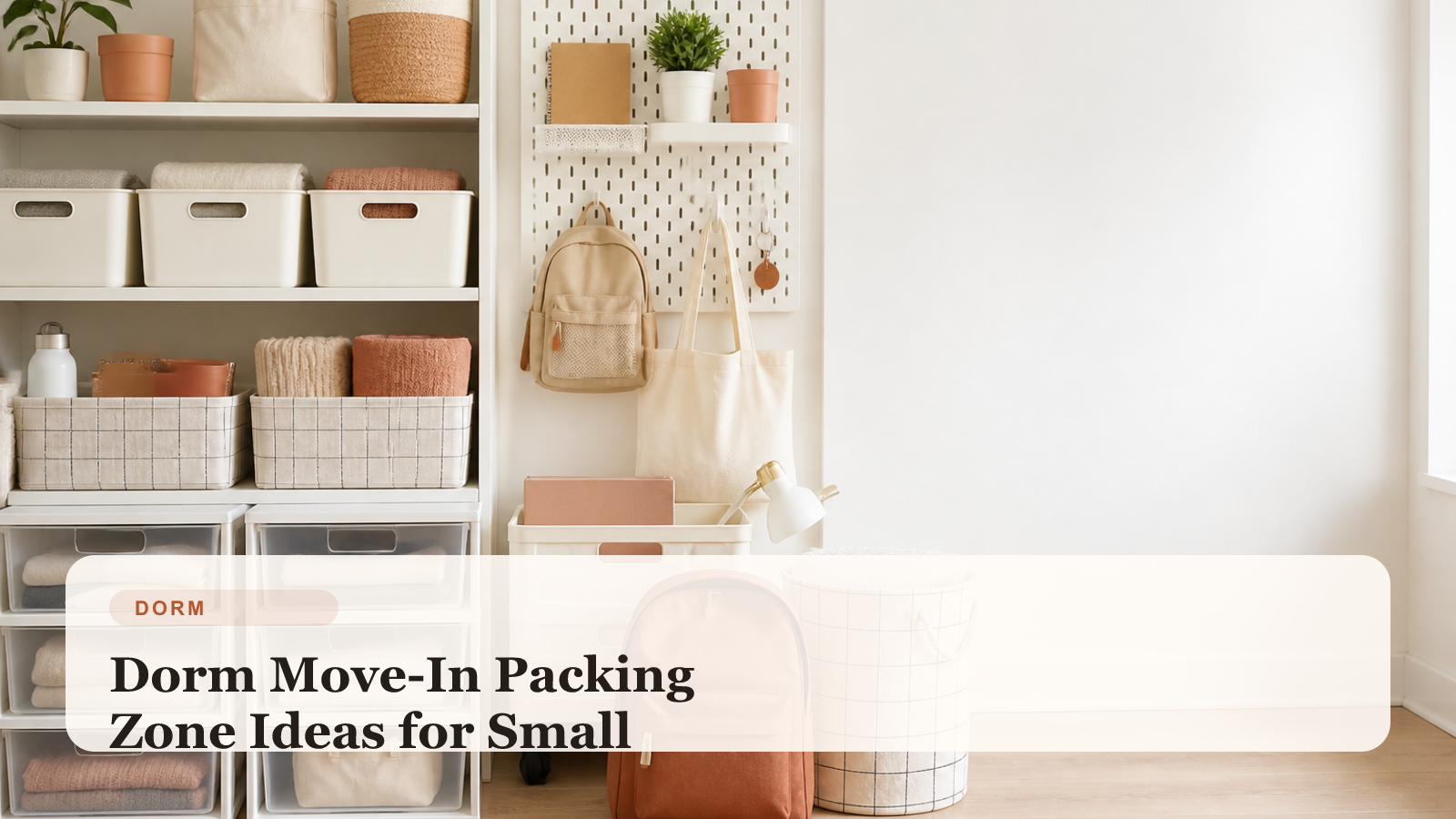
Dorm Move-In Packing Zone Ideas for Small Rooms
This guide focuses on one stressful dorm moment: how to build a packing zone that keeps move-in supplies, bedding, toiletries, and daily essentials easier to manage.
Editorial note
TidyHaven guides are written for practical, renter-aware small-space living. Pages may be updated over time for clarity, freshness, and better real-world usefulness.